Varicose veins are usually not dangerous, but they are not just a cosmetic problem either. Left untreated, they can worsen over time and lead to complications such as skin changes, leg ulcers, bleeding and blood clots. Sudden leg swelling, pain, a non-healing sore or bleeding from a vein needs prompt medical care. Modern varicose veins treatment is minimally invasive, and IKIGAI Hospitals offers it in Kondapur and Manikonda, Hyderabad.
What Are Varicose Veins?
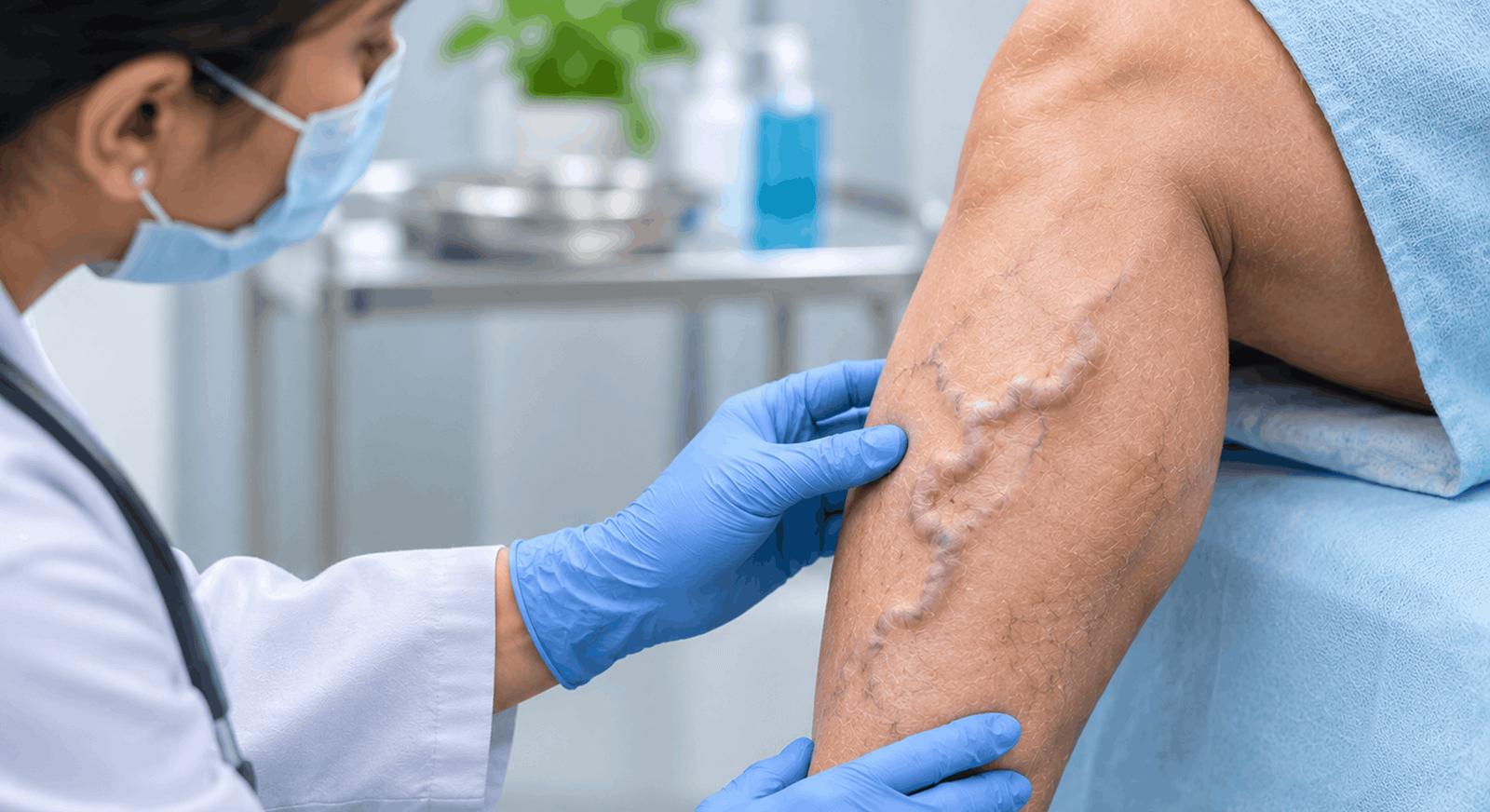
Varicose veins are swollen, twisted veins that bulge under the skin, most often in the calves and thighs. They look blue or purple and may feel like ropes or cords.
They form when the small one-way valves inside leg veins weaken. Normally these valves push blood up towards the heart. When they leak, blood flows backwards and pools in the leg, stretching the vein walls. This condition is called chronic venous insufficiency
Common symptoms include:
- Heavy, aching or tired legs, especially by evening
- Swelling around the ankles
- Itching, burning or throbbing over the veins
- Night cramps or restless legs
- Symptoms that ease when you raise your legs
Spider veins are smaller, thread-like veins near the surface. They are mostly cosmetic, while larger varicose veins are more likely to cause symptoms and complications.
Are Varicose Veins Dangerous?
For most people, varicose veins are not dangerous in the short term. According to the NHS, most people with varicose veins never develop complications, and when they do, it is usually several years after the veins first appear.
However, varicose veins are a sign that blood is not draining properly from the legs. NICE guidelines note that they can become more severe over time and lead to skin pigmentation changes, bleeding or venous ulcers. The main complications are:
| Complication | What happens | How serious |
|---|---|---|
| Skin changes | Darkening, eczema, dry itchy skin and hardening around the ankle (lipodermatosclerosis) | Warning sign of advanced venous disease |
| Venous leg ulcer | An open sore, usually near the inner ankle, that heals slowly | Serious; needs specialist care |
| Bleeding | A vein close to the skin can burst after a minor knock | Can be heavy; needs urgent care |
| Superficial thrombophlebitis | A clot in a surface vein, causing a red, hard, painful cord | Usually mild, but needs a scan |
| Deep vein thrombosis (DVT) | A clot in a deep leg vein | Rare, but can travel to the lungs |
The HSE notes that clots in surface veins rarely extend into the deep veins, but when a DVT occurs it can lead to a pulmonary embolism, which is a medical emergency. This is why painful, swollen or changing varicose veins should always be checked by a vascular surgeon in Hyderabad rather than ignored.
Warning Signs: When Varicose Veins Need Attention
See a vascular specialist soon if you have varicose veins along with any of the following:
- Aching, heaviness or swelling that affects your daily routine
- Skin over the veins turning brown, red or scaly
- Hard, tight or shiny skin around the ankle
- A sore or wound on the lower leg that is slow to heal
- A vein that is red, hot, hard and tender to touch
Seek emergency care immediately if you notice:
- Bleeding from a varicose vein that does not stop with pressure and leg elevation
- Sudden swelling, pain or warmth in one calf or thigh, which may signal DVT
- Breathlessness, chest pain or coughing up blood, which may signal a clot in the lungs
If a vein bleeds, lie down, raise the leg above heart level and press firmly on the spot with a clean cloth while help is on the way.
Who Is at Higher Risk of Complications?
Complications are more likely when varicose veins are left untreated for years, and in people who:
- Stand or sit for long hours at work, such as teachers, traffic police, salespeople, IT professionals and drivers
- Have a family history of varicose veins
- Are overweight
- Have had multiple pregnancies
- Are older, as vein valves weaken with age
- Have had a previous DVT or leg injury
- Have diabetes or reduced mobility, which slows wound healing
If you fall into one or more of these groups and have visible or symptomatic veins, an early check-up is worth it.
How Varicose Veins Are Diagnosed and Treated
The key test is a venous Doppler (duplex) ultrasound. It is painless, takes about 20–30 minutes, and shows which valves are leaking and whether there is any clot. This scan guides the choice of treatment.
Today, most patients do not need traditional open surgery. Common varicose veins treatment options include:
| Treatment | How it works | Recovery |
|---|---|---|
| Compression stockings | Graduated pressure helps blood flow up the leg and eases symptoms | No downtime |
| Endovenous laser ablation (EVLA) | A laser fibre inside the vein seals it shut with heat | Walk the same day; routine in a few days |
| Radiofrequency ablation (RFA) | Radiofrequency energy closes the faulty vein | Walk the same day; routine in a few days |
| Medical adhesive (glue) closure | A medical-grade glue seals the vein without heat | Quick recovery |
| Sclerotherapy | An injection shrinks smaller veins and spider veins | Minimal downtime |
| Surgery (ligation and stripping) | The vein is tied off and removed | Longer recovery; now used less often |
Once the faulty vein is closed, blood naturally reroutes through healthy veins. Your vascular surgeon will recommend the right option based on your scan, symptoms and overall health. Patients with existing sores may also need venous ulcer treatment alongside vein closure.
Can You Prevent Varicose Veins from Getting Worse?
You cannot always prevent varicose veins, but these habits slow their progress and lower the risk of complications:
- Walk for at least 30 minutes most days to strengthen the calf muscle pump
- Avoid standing or sitting still for long periods; move every 30–45 minutes
- Raise your legs above heart level for 15 minutes, two or three times a day
- Wear compression stockings if your doctor advises them
- Maintain a healthy weight
- Moisturise the skin on your lower legs to prevent cracking
- Avoid tight clothing around the waist and thighs
Varicose Veins Treatment at IKIGAI Hospitals, Hyderabad
IKIGAI Hospitals offers diagnosis and treatment for varicose veins at its centres in Kondapur and Manikonda, Hyderabad. Care is led by Dr. Viswanath Atreyapurapu, Vascular and Endovascular Surgeon, who specialises in minimally invasive treatment of vein and artery conditions.
Patients receive:
- A detailed consultation and venous Doppler assessment
- A personalised plan based on vein mapping, symptoms and lifestyle
- Minimally invasive procedures with a focus on quick return to daily activities
- Integrated care for complications such as venous ulcers and advanced wound care
If your legs feel heavy, swollen or painful, or you have noticed skin changes around your ankles, an early visit can stop the problem from progressing.
Medical Disclaimer
This article is for general information and educational purposes only. It is not a substitute for professional medical advice, diagnosis or treatment. Always consult a qualified doctor or vascular specialist about your symptoms before starting or changing any treatment. If you have sudden leg swelling, chest pain, breathlessness or heavy bleeding, seek emergency medical care immediately.