Best Minimally Invasive Treatments for Varicose Veins Explained
Millions of people worldwide suffer from varicose veins. Usually, in the legs, they look like enlarged, twisted, blue or purple veins. Many people think of varicose veins as cosmetic, but they can also cause pain, swelling, fatigue, and discomfort.
Modern medical advances have made varicose vein treatment safer, faster, and less painful than traditional surgery. Nowadays, minimally invasive procedures let patients get back to normal quickly.
We explain the best minimally invasive varicose vein treatments and how they can improve vascular health and quality of life.
What Causes Varicose Veins?
Vascular valves inside veins get weak or damaged, causing varicose veins. Blood normally flows back toward the heart through these valves. Blood builds up inside the veins when they're not working properly, causing them to enlarge and twist.
Common risk factors include:
- Long hours of standing or sitting
- Family history of vein disease
- Obesity
- Pregnancy
- Aging
- Lack of physical activity
Symptoms may include:
- Leg pain or heaviness
- Swelling in the legs or ankles
- Burning or throbbing sensations
- Night cramps
- Itching around the veins
- Skin discoloration
- Visible bulging veins
If you ignore varicose veins for a long time, you might get ulcers, bleeding, or blood clots.
Why Minimally Invasive Treatments Are Preferred
In the past, vein stripping surgery required big incisions, stitches, hospital stays, and longer recovery times. Minimally invasive procedures have mostly replaced these surgeries because they offer a lot of benefits:
- Smaller or no incisions
- Less pain and discomfort
- Faster recovery
- Minimal scarring
- Shorter procedure times
- Same-day discharge in most cases
Internally damaged veins are treated with advanced imaging and specialized technology.
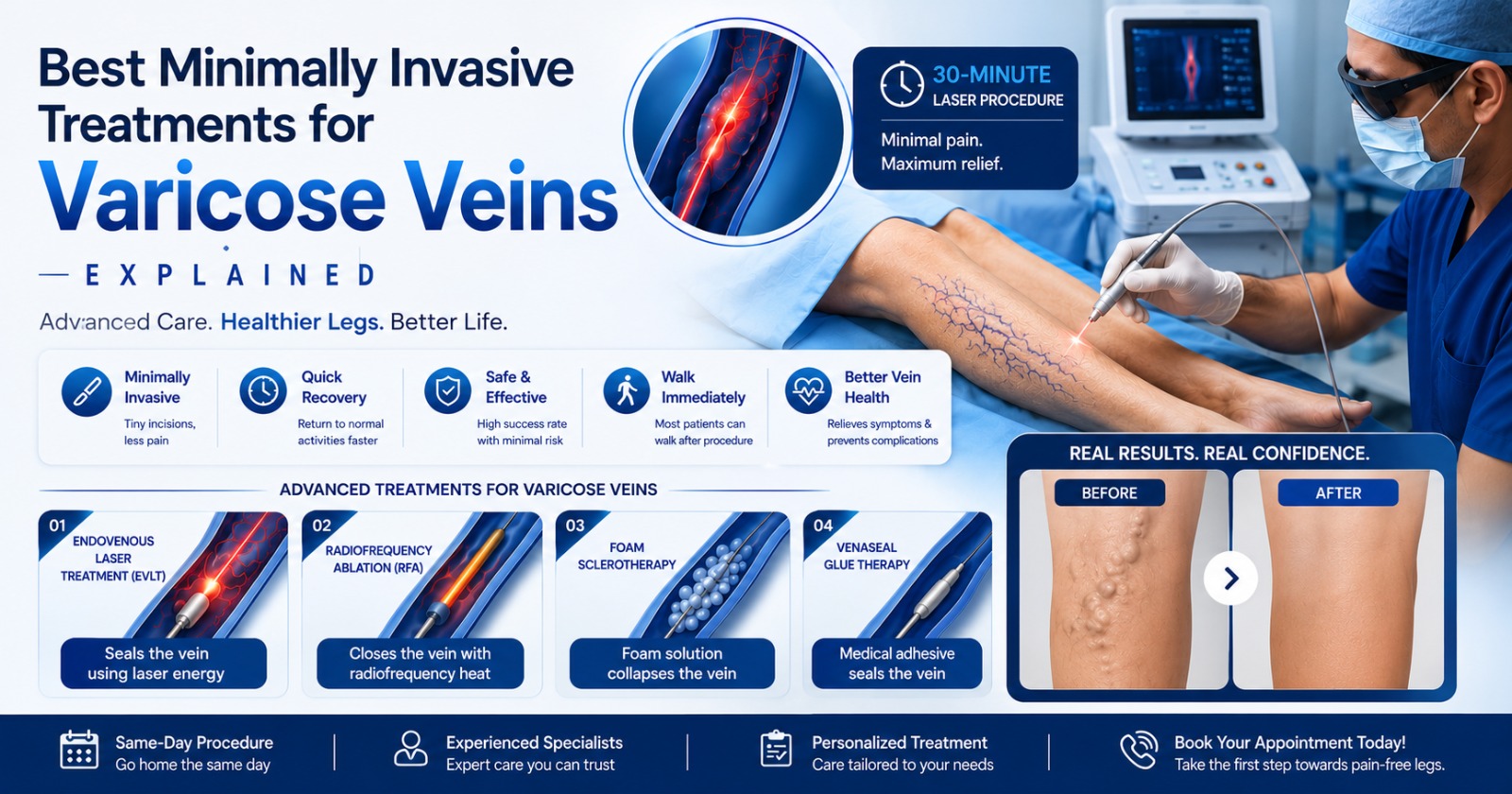
1. Endovenous Laser Treatment (EVLT)
EVLT, or endovenous laser treatment, is one of the most popular and effective treatments for varicose veins.
How EVLT Works
During the procedure:
- A thin laser fiber is inserted into the affected vein through a tiny puncture.
- Laser energy is delivered inside the vein.
- The vein seals shut safely.
- Blood naturally reroutes through healthy veins.
Over time, the treated vein shrinks and is absorbed by the body.
Benefits of EVLT
- No major surgery
- Minimal scarring
- Quick recovery
- High success rate
- Less post-procedure pain
Within a few days, most patients can walk again and resume routine activities.
2. Radiofrequency Ablation (RFA)
Another advanced treatment for varicose veins is radiofrequency ablation. To close damaged veins, radiofrequency heat is used instead of lasers.
Why Patients Choose RFA
- Minimal discomfort
- Faster healing
- Effective symptom relief
- Reduced bruising compared to older surgical methods
For larger varicose veins, RFA is a great long-term solution.
3. Foam Sclerotherapy
For smaller varicose veins and spider veins, foam sclerotherapy is common.
How It Works
During the procedure, a special foam solution is injected directly into the affected vein. Inflammation causes the vein walls to collapse, leading to the vein fading away.
Advantages
- No surgery required
- Performed as an outpatient procedure
- Quick treatment sessions
- Effective for smaller veins
Multiple sessions may sometimes be needed, depending on the extent of vein disease.
4. Venaseal Glue Therapy
Using medical adhesive, Venaseal seals damaged veins with minimally invasive surgery.
Key Benefits
- No heat-based energy required
- Minimal injections
- Little or no need for compression stockings afterward
- Quick recovery time
This advanced technique is becoming increasingly popular for selected patients.
Recovery After Minimally Invasive Treatment
Recovery is generally much easier compared to traditional surgery.
Most patients are advised to:
- Walk regularly after the procedure
- Wear compression stockings temporarily
- Avoid prolonged standing initially
- Maintain healthy physical activity
Many people return to office work and routine activities within a day or two.
Who Is a Good Candidate?
Minimally invasive varicose vein treatments may be suitable for people experiencing:
- Painful veins
- Leg swelling or heaviness
- Skin discoloration
- Burning or cramping sensations
- Venous ulcers
- Cosmetic concerns affecting confidence
A vascular specialist usually performs a venous Doppler ultrasound to evaluate the veins and determine the most suitable treatment.
Why Early Treatment Matters
Many people delay treatment because they believe varicose veins are harmless. However, untreated vein disease can progress over time and lead to serious complications.
Early treatment can:
- Improve blood circulation
- Reduce pain and swelling
- Prevent ulcers and skin damage
- Improve mobility and comfort
- Enhance cosmetic appearance
Minimally invasive treatments have transformed varicose vein treatment. Compared with traditional surgery, EVLT, RFA, foam sclerotherapy, and Venaseal offer effective solutions with less pain and downtime.
A vascular specialist can help prevent complications and improve overall vascular health if you have persistent leg pain, swelling, or visible veins.
Today's advanced treatments can safely, comfortably, and effectively treat varicose veins without major surgery.