Can Varicose Veins Go Away Naturally?
Can Varicose Veins Go Away Naturally?
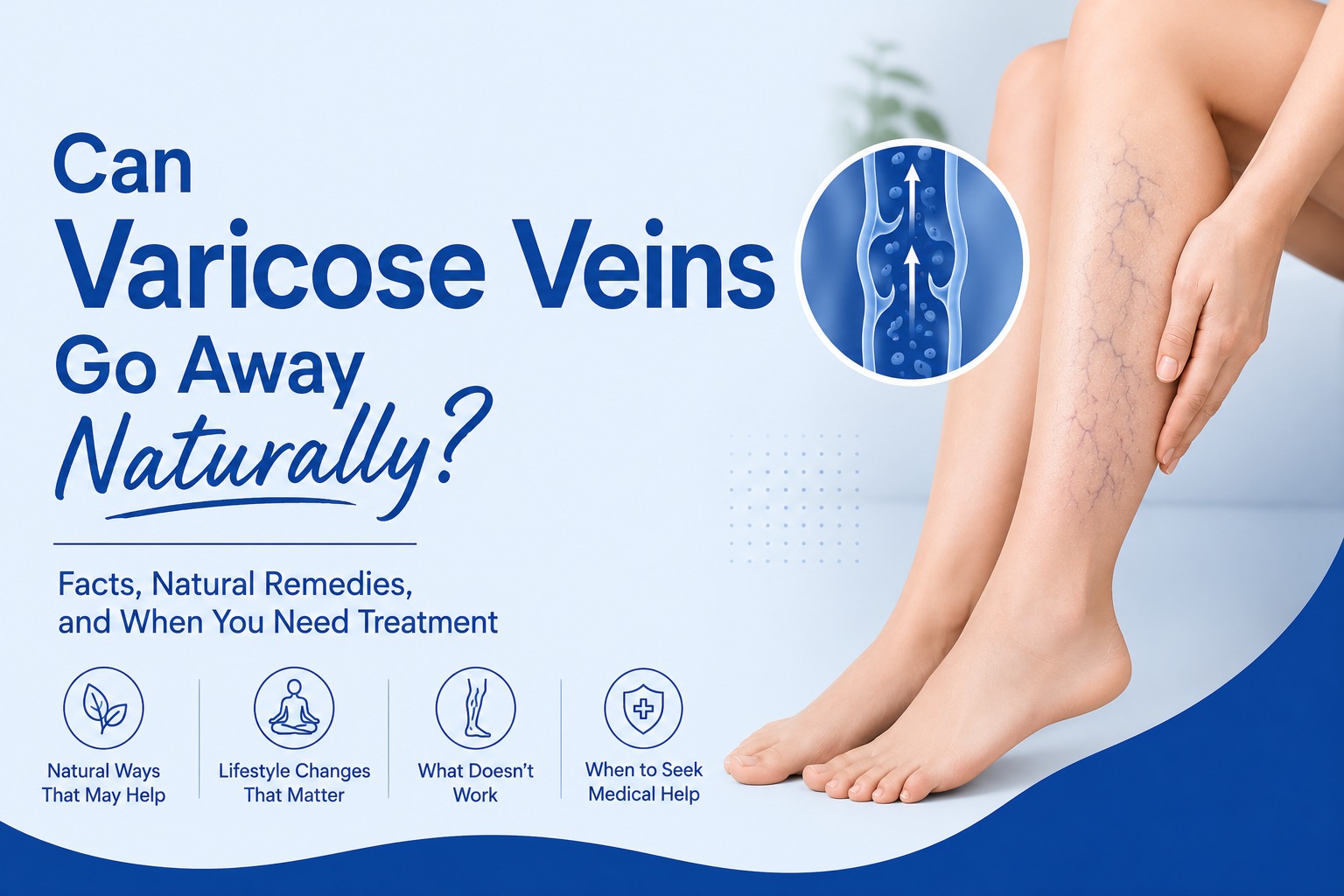
If you have noticed twisted, blue or bulging veins on your legs, you may be wondering: Can varicose veins go away naturally?
The short answer is usually no. Established varicose veins generally do not disappear completely on their own because the underlying problem may involve weak or poorly functioning valves inside the veins.
Walking, regular movement, weight management and leg elevation may help reduce symptoms such as pain, heaviness or swelling. However, these measures may not repair the affected vein valves or permanently remove established varicose veins.
This does not mean that every person with varicose veins needs a procedure. Treatment depends on your symptoms, the veins involved and whether abnormal backward blood flow, called venous reflux, is present.
A vascular evaluation and, when clinically required, a venous Doppler scan can help identify the underlying problem and guide appropriate treatment.
What Are Varicose Veins?
Direct Answer: Varicose veins are enlarged, twisted or bulging veins that usually develop in the legs. They occur when valves inside certain veins do not function effectively, allowing blood to flow backwards and collect in the vein. Increased pressure can gradually cause the affected vein to enlarge.
Veins are blood vessels that carry blood back towards the heart.
The veins in your legs work against gravity. Small one-way valves inside the veins help keep blood moving upwards towards the heart.
When these valves become weak or do not close properly, some blood may flow backwards.
This abnormal backward flow of blood is called venous reflux.
Blood can then collect inside the affected vein. Over time, increased pressure may cause the vein to stretch, enlarge and become visibly twisted. Learn more about chronic venous insufficiency.
Varicose veins may appear:
- Blue or purple
- Twisted or rope-like
- Raised above the skin
- Bulging while standing
- More visible around the calf, thigh or lower leg
Some people have visible varicose veins without significant discomfort.
Others may experience leg pain, heaviness, swelling, itching or skin changes.
Can Varicose Veins Go Away Naturally?
Direct Answer: Varicose veins usually do not go away completely on their own. Natural measures such as walking, regular exercise, weight management and leg elevation may help reduce symptoms and support blood circulation. However, established varicose veins may remain because the underlying vein valve problem can persist.
It is important to understand the difference between reducing symptoms and correcting the underlying vein problem.
For example, walking regularly activates the calf muscles.
The calf muscles help push blood upwards from the legs towards the heart. This is sometimes described as the calf muscle pump.
With regular movement, some people may experience:
- Less leg heaviness
- Reduced mild swelling
- Less aching
- Improved comfort after standing
- Better tolerance for daily activities
However, the visible varicose vein may still remain.
This is because walking or exercise does not necessarily restore a poorly functioning vein valve.
Some people may manage mild symptoms with lifestyle changes. Others with persistent symptoms or significant venous reflux may require further vascular assessment.
Why Don't Varicose Veins Disappear on Their Own?
Direct Answer: Varicose veins may persist because the valves inside affected veins are not functioning effectively. When blood repeatedly flows backwards and collects in the vein, pressure can remain elevated. Lifestyle measures may support circulation but may not correct the underlying valve dysfunction.
Think of a vein valve as a one-way door.
Normally, the valve allows blood to move upwards and helps prevent it from flowing backwards.
If the valve does not close properly, blood may repeatedly move in the wrong direction.
The process may occur in the following way:
- A vein valve does not close effectively.
- Blood flows backwards inside the vein.
- Blood collects and increases pressure in the vein.
- The affected vein stretches and becomes enlarged.
- The vein may become more visible or cause symptoms.
This is one reason why creams, oils or home remedies should not automatically be considered a cure for varicose veins.
They may provide temporary comfort in some situations, but they do not necessarily correct abnormal blood flow inside the affected vein.
Can Early Varicose Veins Improve Naturally?
Direct Answer: Mild symptoms associated with early venous problems may improve with regular walking, physical activity, weight management and avoiding prolonged inactivity. However, visible varicose veins may not completely disappear. Persistent pain, swelling or skin changes should be medically evaluated.
Some people notice visible veins before significant symptoms develop.
Healthy daily habits may help support circulation and reduce avoidable pressure on the leg veins.
However, the appearance of a vein alone cannot always tell you how significant the underlying venous problem is.
A small visible vein may be mainly a cosmetic concern.
In another patient, persistent swelling, heaviness or skin changes may indicate a more significant venous circulation problem.
If symptoms continue or worsen, a vascular assessment may help identify the cause.
What Natural Measures Can Help Varicose Vein Symptoms?
Direct Answer: Regular walking, leg movement, maintaining a healthy body weight and elevating the legs may help manage symptoms associated with varicose veins. These measures support venous circulation but should not be considered a guaranteed way to permanently remove established varicose veins.
1. Walk Regularly
Walking activates the calf muscles.
When the calf muscles contract, they help move venous blood upwards from the lower legs.
Regular walking may help some people manage:
- Leg heaviness
- Mild swelling
- Aching
- Discomfort associated with prolonged inactivity
You do not necessarily need intense exercise simply because you have varicose veins.
Regular movement may be more practical for many patients.
If you have severe leg pain or another medical condition, ask your doctor what level of physical activity is appropriate.
2. Avoid Sitting for Long Periods
Long desk hours can keep the calf muscles inactive for extended periods.
This may affect normal venous blood flow from the legs.
If your work involves prolonged sitting, consider simple movement habits such as:
- Standing up periodically
- Walking for a few minutes
- Moving your ankles
- Changing your sitting position
- Taking regular movement breaks
These habits may support normal leg circulation.
3. Avoid Prolonged Standing Without Movement
Standing for several hours without much movement may worsen symptoms in some people with varicose veins.
This can be relevant for:
- Healthcare workers
- Teachers
- Retail employees
- Security personnel
- Hospitality staff
- Salon professionals
- Factory workers
If your job requires prolonged standing, changing position and walking periodically may help reduce discomfort.
4. Maintain a Healthy Body Weight
Excess body weight may increase pressure on the veins in the legs.
For people who are overweight, gradual and medically appropriate weight management may support overall vascular health.
However, weight loss should not be presented as a cure for established varicose veins.
People with a healthy body weight can also develop varicose veins.
5. Elevate Your Legs
Raising your legs while resting may help reduce swelling and heaviness in some people.
Leg elevation can help reduce the effect of gravity on venous blood return.
The appropriate frequency and duration may depend on your symptoms and overall health.
6. Stay Physically Active
Regular physical activity supports calf muscle function and general cardiovascular health.
Walking is a practical activity for many people.
Depending on your overall health, other forms of physical activity may also be appropriate.
Exercise may help manage symptoms, but it does not necessarily repair damaged or poorly functioning vein valves.
Do Home Remedies Cure Varicose Veins?
Direct Answer: There is no reliable evidence that common home remedies can repair poorly functioning vein valves or permanently remove established varicose veins. Some self-care measures may improve comfort, but persistent pain, swelling, skin changes or enlarging veins should be medically assessed.
People commonly search online for:
- Oils for varicose veins
- Herbal creams
- Massage techniques
- Apple cider vinegar
- Home-made pastes
- Supplements
- Special diets
Be cautious about products that claim to "dissolve", "reverse" or "permanently cure" varicose veins.
Varicose veins may be associated with abnormal blood flow inside the affected veins.
Applying a cream or oil to the skin does not necessarily correct venous reflux.
If you are using a supplement, herbal product or topical preparation, discuss it with an appropriate healthcare professional, particularly if you have other medical conditions or take regular medicines.
Can Massage Remove Varicose Veins?
Direct Answer: Massage should not be considered a treatment that removes varicose veins or repairs faulty vein valves. People with painful, red, warm or suddenly swollen veins should avoid relying on massage and seek medical advice because these symptoms may require further evaluation.
Gentle movement may support general leg comfort.
However, aggressive pressure over painful or inflamed veins is not a substitute for medical assessment.
Consult a doctor if a vein becomes:
- Suddenly painful
- Red
- Warm
- Hard
- Tender
Do not assume that massage can "break" or "clear" a blood clot.
Sudden leg symptoms may require prompt medical evaluation.
Do Compression Stockings Make Varicose Veins Go Away?
Direct Answer: Compression stockings for varicose veins may help support blood flow in the legs and reduce swelling or discomfort in selected patients. However, they do not necessarily make established varicose veins permanently disappear. The appropriate compression level and fit depend on individual clinical factors.
Compression stockings apply controlled pressure to the legs.
This pressure may support venous blood return and help manage certain symptoms.
However, not every person should choose compression stockings without considering their overall circulation and health.
The following factors may matter:
- Correct stocking size
- Compression pressure
- Location of symptoms
- Other vascular conditions
- Overall health
People with certain arterial circulation problems may require specific medical advice before using compression therapy.
If symptoms are persistent, seek clinical guidance rather than choosing strong compression stockings based only on an online recommendation.
Can Exercise Cure Varicose Veins?
Direct Answer: Exercise can support blood circulation and calf muscle function, but it usually does not cure established varicose veins. Walking and appropriate physical activity may reduce heaviness, mild swelling or discomfort. Persistent symptomatic veins may still require vascular assessment.
The calf muscles play an important role in moving blood from the lower legs.
When you walk, these muscles contract and help push venous blood upwards.
Appropriate activities may include:
- Walking
- Cycling, when suitable
- Swimming
- General lower-body movement
The right exercise depends on your health and symptoms.
If exercise causes significant pain, sudden swelling or worsening symptoms, consult a healthcare professional.
What Are the Early Symptoms of Varicose Veins?
Direct Answer: Early symptoms of varicose veins may include visible blue or purple veins, aching, leg heaviness, mild ankle swelling, itching and discomfort after prolonged standing. Symptoms may become more noticeable towards the end of the day.
Common signs and symptoms include:
- Visible twisted veins
- Bulging veins in the legs
- Aching or throbbing
- Heavy feeling in the legs
- Ankle or lower-leg swelling
- Itching around visible veins
- Burning sensations
- Leg cramps
- Discomfort after standing for long periods
- Skin colour changes in more advanced venous disease
Not everyone with visible veins has significant venous disease.
Similarly, leg pain and swelling should not automatically be blamed on varicose veins. Learn more about leg swelling and poor circulation.
A proper clinical assessment can help identify whether symptoms are related to a venous problem or another condition.
Are Varicose Veins Dangerous?
Direct Answer: Varicose veins are not always dangerous, and some people experience few symptoms. However, persistent venous disease may sometimes be associated with skin changes, bleeding, inflammation or venous leg ulcers. Sudden one-sided leg swelling or significant unexplained pain needs prompt medical evaluation.
Possible complications associated with venous disease may include:
- Persistent leg swelling
- Skin pigmentation
- Inflammatory skin changes
- Bleeding from a superficial varicose vein
- Superficial vein inflammation
- Venous leg ulcers
Sudden swelling in one leg, significant pain, warmth or redness should not automatically be treated as ordinary varicose vein symptoms.
Depending on the clinical situation, these symptoms may require assessment for conditions such as deep vein thrombosis, also called DVT.
What Happens If Varicose Veins Are Left Untreated?
Direct Answer: Not every varicose vein will become severe. However, venous disease may progress in some patients and cause worsening pain, swelling, skin changes, bleeding or venous ulcers. Persistent or worsening symptoms should be assessed by a healthcare professional.
The progression of varicose veins varies from person to person.
Some people may have mild and stable veins for years.
Others may notice:
- Increasing vein size
- More frequent aching
- Persistent ankle swelling
- Darkening of the skin
- Itching or skin irritation
- Changes in the skin around the ankle
- Slow-healing wounds
Treatment decisions should be based on the patient's symptoms and clinical findings.
It is not correct to assume that every visible vein needs a procedure.
At the same time, persistent symptoms should not be repeatedly ignored simply because varicose veins are common. Learn about non-healing leg wounds.
How Are Varicose Veins Diagnosed?
Direct Answer: Varicose veins are assessed through medical history, examination of the legs and, when clinically required, a venous Doppler scan. A Doppler scan helps assess blood flow in the leg veins and can identify abnormal backward blood flow, known as venous reflux.
What Happens During a Varicose Vein Assessment?
1. Your symptoms are discussed
The doctor may ask about leg pain, swelling, heaviness, itching and when your symptoms become worse.
2. Your medical history is reviewed
Previous blood clots, pregnancy, family history and other health factors may be relevant.
3. Your legs are examined
Visible varicose veins, swelling and changes in the skin may be assessed.
4. A venous Doppler scan may be recommended
This non-invasive scan helps evaluate blood flow in the leg veins and identify venous reflux.
5. Treatment options are considered
The treatment plan depends on your symptoms, Doppler scan findings, affected veins and individual clinical factors.
What Is a Doppler Scan for Varicose Veins?
A Doppler scan is a non-invasive ultrasound test used to assess blood flow in the leg veins.
The scan uses sound waves to provide information about blood movement through the blood vessels.
In people with varicose veins, a venous Doppler scan may help identify abnormal backward blood flow, known as venous reflux.
It can also help the vascular specialist understand which veins are affected.
This information may be useful when deciding whether conservative management or a vascular procedure should be considered.
How Are Varicose Veins Treated If They Don't Go Away Naturally?
Direct Answer: When varicose veins remain symptomatic or are associated with significant venous reflux, treatment may include compression therapy, sclerotherapy, endovenous laser treatment, radiofrequency ablation or other vascular procedures. The appropriate treatment depends on symptoms, Doppler scan findings and individual patient factors.
Not every patient needs the same treatment.
A vascular specialist may consider:
- Severity of symptoms
- Doppler scan findings
- Veins involved
- Pattern of venous reflux
- Skin changes
- Previous vascular problems
- Overall health
Compression Therapy
Compression stockings may help selected patients manage pain, swelling or heaviness.
They support venous blood return but do not necessarily permanently remove established varicose veins.
The correct fit and compression level are important.
Sclerotherapy
Sclerotherapy involves injecting a specialised solution or foam into selected veins.
The treatment is intended to close the treated vein.
Blood can then continue through other functioning veins.
Suitability depends on the type, location and pattern of the affected veins.
Endovenous Laser Treatment
Endovenous laser treatment uses controlled thermal energy delivered inside an affected vein.
The treatment closes the selected vein, allowing blood to be redirected through functioning veins.
It may be considered for selected patients based on clinical assessment and Doppler scan findings.
Radiofrequency Ablation
Radiofrequency ablation uses controlled thermal energy to close an affected vein.
The suitability of this treatment depends on the veins involved, Doppler findings and individual clinical factors.
Other Vascular Procedures
Other procedures may be considered depending on the size, location and pattern of the varicose veins.
Treatment should be selected based on diagnosis.
A procedure should not be chosen only because it is described as "advanced", "laser" or "latest".
The aim of assessment is to understand the underlying venous problem and recommend an appropriate treatment plan. Explore varicose vein treatment in Hyderabad.
Comparison Table
| Treatment or Approach | How It Works | Suitable For | Key Considerations |
|---|---|---|---|
| Walking and regular movement | Activates calf muscles and supports venous blood return | People managing mild symptoms or prolonged inactivity | May improve symptoms but may not remove established varicose veins |
| Leg elevation | Helps reduce the effect of gravity while resting | Selected patients with heaviness or swelling | Supports symptom management rather than repairing vein valves |
| Weight management | May reduce excess pressure on the leg veins | Patients who are overweight | Does not guarantee removal of existing varicose veins |
| Compression therapy | Applies controlled pressure to support venous circulation | Selected patients with swelling or discomfort | Correct fit and compression level are important |
| Sclerotherapy | Uses an injected solution or foam to close selected veins | Certain superficial or varicose veins | Suitability depends on vein type and assessment |
| Endovenous laser treatment | Uses controlled thermal energy to close an affected vein | Selected patients with venous reflux | Treatment planning may depend on Doppler scan findings |
| Radiofrequency ablation | Uses controlled thermal energy to close the affected vein | Selected patients with suitable vein anatomy | Individual assessment is required |
Key Takeaways
- Established varicose veins usually do not disappear completely on their own.
- Walking, regular movement, leg elevation and healthy weight management may help reduce symptoms.
- Natural measures can support circulation but may not repair poorly functioning vein valves.
- Compression stockings may help selected patients manage pain or swelling but do not necessarily remove varicose veins.
- A venous Doppler scan can help assess blood flow and identify venous reflux when clinically required.
- Persistent pain, swelling, skin changes or worsening varicose veins should be medically evaluated.
When to See a Doctor
Direct Answer: Consult a vascular specialist if varicose veins cause persistent pain, heaviness, swelling, itching or skin changes. Bleeding from a vein or a non-healing leg wound requires medical assessment. Sudden one-sided leg swelling or significant unexplained pain should be evaluated promptly.
Seek medical advice if you notice:
- Persistent leg pain
- Regular ankle or leg swelling
- Increasingly prominent veins
- Skin darkening around the ankle
- Persistent itching or skin inflammation
- Bleeding from a visible vein
- A slow-healing leg wound
- Sudden swelling in one leg
- Significant unexplained leg pain
A vascular surgeon in Hyderabad or vascular specialist can assess the veins and blood circulation in your legs.
When clinically required, a venous Doppler scan may be recommended to evaluate blood flow and identify venous reflux.
Frequently Asked Questions
Can varicose veins disappear naturally?
Established varicose veins usually do not disappear completely on their own. Walking, exercise, leg elevation and healthy weight management may help reduce symptoms. However, the affected vein may remain because an underlying vein valve problem can persist.
Can walking reduce varicose veins?
Walking activates the calf muscles and supports venous blood flow from the legs towards the heart. It may help reduce heaviness, mild swelling or discomfort. However, walking usually does not permanently remove an established varicose vein.
Can I walk if I have varicose veins?
Many people with varicose veins can walk, and regular walking may support calf muscle function and venous circulation. However, if walking causes significant pain or you develop sudden swelling, seek medical advice rather than assuming the symptoms are caused only by varicose veins.
Can exercise cure varicose veins?
Exercise can support blood circulation and calf muscle function, but it usually does not repair a poorly functioning vein valve. Appropriate exercise may help manage symptoms, while persistent or painful varicose veins may require vascular evaluation.
Do compression stockings remove varicose veins?
Compression stockings may support venous blood flow and reduce swelling or discomfort in selected patients. They do not necessarily make established varicose veins permanently disappear. The correct size and compression level are important.
Are varicose veins dangerous?
Varicose veins are not always dangerous. However, some people may develop persistent swelling, skin changes, bleeding, inflammation or venous ulcers. Sudden swelling in one leg or significant unexplained pain requires prompt medical evaluation.
Which doctor should I consult for varicose veins?
A vascular surgeon or vascular specialist evaluates conditions affecting veins and blood circulation. Depending on your symptoms and clinical findings, the specialist may recommend a venous Doppler scan to assess blood flow in the leg veins.
How do doctors check blood flow in the legs?
Doctors may recommend a Doppler scan to assess blood flow in the leg veins. The scan can help identify abnormal backward blood flow, known as venous reflux, and provide information about veins affected by varicose vein disease.
Is varicose vein treatment painful?
The level of discomfort varies depending on the procedure and the individual patient. Some vein procedures may be associated with temporary tenderness, bruising or discomfort. Your treating specialist should explain expected discomfort, pain management and recovery before treatment.
How long does recovery take after varicose vein treatment?
Recovery depends on the type of treatment, the number and size of veins treated and individual health factors. Some minimally invasive procedures may allow an earlier return to routine activities. Patients should follow the specific recovery advice provided by their treating specialist.
Conclusion
Can Varicose Veins Go Away Naturally? The Final Answer
Varicose veins usually do not disappear completely on their own once the affected veins have become enlarged and the underlying valves are not functioning effectively.
Natural measures such as regular walking, movement breaks, healthy weight management and leg elevation may help reduce pain, swelling or heaviness.
These habits can support venous circulation, but they should not be confused with repairing an underlying vein valve problem.
Not every visible varicose vein needs immediate treatment.
However, persistent leg pain, swelling, skin changes, bleeding or a non-healing wound should not be repeatedly managed with home remedies without medical assessment.
A vascular evaluation and, when clinically required, a venous Doppler scan can help assess blood flow, identify venous reflux and guide an individual treatment plan.
Trying home remedies but still experiencing leg pain or swelling?
If varicose vein symptoms continue despite regular movement and lifestyle changes, a vascular assessment may help identify whether venous reflux or another circulation problem is contributing to your symptoms.
If you are experiencing persistent leg pain, swelling, heaviness, visible bulging veins or changes in the skin around your ankles, consider seeking a vascular evaluation.
Patients looking for assessment of varicose veins in Hyderabad can consult the vascular care in Hyderabad team at Ikigai Hospitals. Clinical evaluation and, when required, a venous Doppler scan may help assess the underlying vein problem and guide treatment planning based on each patient's condition.
Medical evaluation is particularly important when symptoms are worsening, affecting daily activities or associated with skin changes, bleeding or a non-healing wound.