

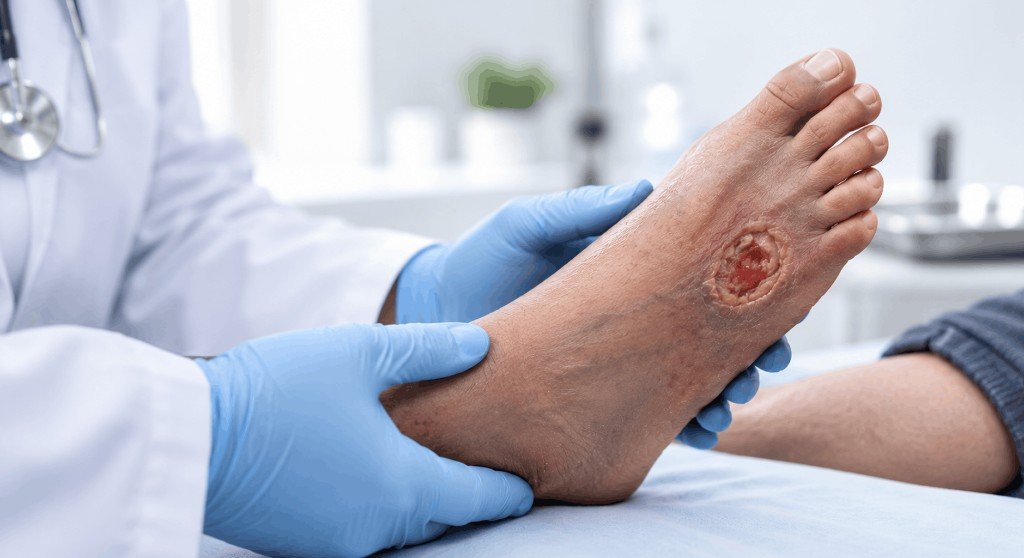
A diabetic foot ulcer is an open sore or wound, usually on the sole, toes or heel, in people with diabetes. Early warning signs include redness, swelling, warmth, unusual drainage on socks, a foul smell, calluses with dark spots, numbness or tingling, skin colour changes, and cuts or blisters that heal slowly. Because nerve damage often blocks pain, many people don’t notice an ulcer until it becomes serious. Checking your feet every day and seeing a specialist promptly at the first sign of trouble can prevent infection, hospitalisation and amputation.
What Is a Diabetic Foot Ulcer?
A diabetic foot ulcer is a break in the skin that does not heal the way a normal wound should. It is one of the most common and serious complications of diabetes, and a leading cause of diabetes-related hospital admissions and lower-limb amputations.
These ulcers usually form on pressure points, such as the ball of the foot, the tips and tops of the toes, and the heel. They can start very small, as a blister, a crack in dry skin, or a cut from a nail or shoe, and in a short time turn into a deep wound that reaches the underlying tissue or bone.
The good news is that most diabetic foot ulcers can be prevented, and those caught early respond much better to treatment.
Why Are People with Diabetes at Higher Risk?
Diabetes affects the feet in two main ways, and together they create the conditions for ulcers.
Diabetic Neuropathy (Nerve Damage)
High blood sugar over time damages the nerves in the feet. This reduces your ability to feel pain, heat, cold or pressure. A small stone in your shoe, a burn from hot water, or a blister from new footwear can go completely unnoticed and keep getting worse with every step.
Peripheral Arterial Disease (Poor Blood Circulation)
Diabetes also narrows and hardens the blood vessels, which reduces blood flow to the legs and feet. Healing needs oxygen and nutrients carried in the blood. With poor circulation, even minor wounds heal slowly or not at all, and infections are harder to fight.
Other Contributing Factors
- Long-standing or poorly controlled blood sugar
- Foot deformities such as bunions, hammer toes or Charcot foot
- Previous foot ulcers or amputations
- Smoking, which further restricts blood flow
- Kidney disease, high blood pressure and high cholesterol
- Ill-fitting footwear or walking barefoot
- Weakened immunity, which makes infections more likely
Early Warning Signs of a Diabetic Foot Ulcer You Should Never Ignore
Since pain may be missing, you need to rely on what you can see, smell and feel with your hands. Watch for these signs:
1. Drainage or Stains on Your Socks
Fluid, pus or blood stains on your socks are often the first sign of an ulcer you haven’t seen. Check your socks every time you take them off.
2. Redness and Swelling
A red, swollen area around a cut, blister or callus can mean inflammation or early infection. Swelling in one foot that is new or unexplained also needs attention.
3. Warmth in One Area
If one part of your foot feels noticeably warmer than the rest, or warmer than the same spot on the other foot, it can point to infection or inflammation beneath the skin.
4. Unusual or Foul Odour
A bad smell from your foot, even when you can’t see a wound, can indicate tissue breakdown or infection. Never ignore it.
5. Calluses with Dark Spots
Thick calluses are common in diabetic feet, but a callus with a dark, black or bluish centre may mean there is bleeding or an ulcer forming underneath.
6. Numbness, Tingling or Burning
Pins and needles, burning sensations, or a loss of feeling are signs of nerve damage, which means you’re at much higher risk of an unnoticed injury.
7. Changes in Skin Colour
Skin that looks pale, bluish, purple or black can mean poor blood flow or dying tissue. Black tissue around a wound is a medical emergency.
8. Wounds That Heal Slowly
Any cut, crack or blister that hasn’t improved within a few days should be checked by a doctor. In people with diabetes, a “small” wound can turn serious quickly.
9. Dry, Cracked Skin, Especially on the Heels
Deep cracks let bacteria enter and can develop into ulcers. Severe dryness can also come from nerve damage affecting the sweat glands.
10. Changes in Foot Shape
A foot that suddenly looks swollen, flattened or misshapen, especially if it is also warm, may indicate Charcot foot, a serious condition that needs urgent care.
When Is a Diabetic Foot Ulcer an Emergency?
Seek medical help immediately if you notice:
- Fever or chills alongside a foot wound
- Red streaks spreading up from the wound
- Rapidly increasing swelling or pain
- Black or dead-looking tissue
- Pus with a strong, foul smell
- A wound that is deep enough to see tendon or bone
These signs can mean a spreading infection, gangrene or a bone infection (osteomyelitis). Quick treatment can save the limb.
How Is a Diabetic Foot Ulcer Diagnosed?
A specialist will usually:
- Examine the wound’s size, depth and location and check for infection
- Test sensation in your feet to assess nerve damage
- Check blood flow using pulse checks and a Doppler study
- Order X-rays or MRI if bone involvement is suspected
- Take a wound swab or tissue sample to identify bacteria
- Review your blood sugar control and HbA1c levels
Ulcers are often graded by severity, which guides the treatment plan.
Treatment Options for Diabetic Foot Ulcers
Treatment depends on the depth of the ulcer, whether there is infection, and the state of blood circulation. Common approaches include:
- Offloading: Reducing pressure on the ulcer with special footwear, casts or braces so it can heal.
- Debridement: Removing dead or infected tissue to encourage healthy healing.
- Advanced wound care: Specialised dressings that keep the wound clean and support tissue repair.
- Infection control: Antibiotics, and surgical drainage in some cases.
- Restoring blood flow: If poor circulation is slowing healing, vascular procedures such as angioplasty or bypass may be needed to bring blood back to the foot.
- Blood sugar management: Tight glucose control is essential for healing.
- Surgery: For severe infections, deformities or non-healing wounds, surgical treatment may be required.
Diabetic foot care works best with a team approach that brings together wound care, vascular care, diabetes management and surgery under one roof.
Daily Foot Care Tips to Prevent Diabetic Foot Ulcers
Prevention is the most powerful tool you have. Make these habits part of your daily routine:
- Inspect your feet every day. Look at the tops, soles, heels and between the toes. Use a mirror or ask a family member if needed.
- Wash your feet daily with lukewarm water and dry them well, especially between the toes.
- Moisturise dry skin, but avoid applying cream between the toes.
- Never walk barefoot, even at home.
- Wear well-fitting, cushioned footwear and check inside your shoes before wearing them.
- Trim toenails straight across and file sharp edges.
- Don’t treat corns or calluses yourself with blades or chemical removers.
- Keep blood sugar, blood pressure and cholesterol under control.
- Quit smoking to improve circulation.
- Get your feet checked by a specialist regularly, at least once a year, and more often if you’re at high risk.
Why Early Specialist Care Makes All the Difference
Diabetic foot ulcers rarely heal on their own and can get worse silently. Early evaluation by a Diabetic Foot Care Specialist in Kondapur means problems with circulation, nerve damage and infection are identified and treated before they threaten your limb. Many serious complications, including amputations, begin with a small wound that was left alone for too long.
Conclusion: Protect Your Feet, Protect Your Future with Ikigai Hospitals
A diabetic foot ulcer can start as something small, like a blister, a crack or a stain on your sock, but ignoring it can lead to serious infection and even amputation. Knowing the early warning signs, checking your feet every day and getting expert care at the first sign of trouble are the most important steps you can take to keep your feet healthy.
At Ikigai Hospitals, we offer complete diabetic foot care, from early screening and advanced wound care to circulation assessment and limb-saving treatment. Care is led by two experienced Vascular and Endovascular Surgeons, Dr. Viswanath Atreyapurapu and Dr. Surya Kiran Indukuri. Both specialise in diagnosing and treating poor blood circulation, one of the main reasons diabetic foot wounds fail to heal.
Dr. Surya Kiran brings over 12 years of experience and serves as Director of the Peripheral Cathlab. He treats peripheral arterial disease and diabetic foot complications using minimally invasive procedures such as angioplasty and stenting. Together with a dedicated wound care team, our specialists restore healthy blood flow so wounds heal faster, complications are avoided and limbs are protected.
Looking for a trusted Diabetic Foot Care Specialist in Kondapur? Don’t wait for a small wound to become a big problem.
Book your consultation with Dr. Viswanath Atreyapurapu or Dr. Surya Kiran Indukuri at Ikigai Hospitals today, and take the first step toward healthier, safer feet.
Medical Disclaimer
The information in this article is for general educational purposes only and is not a substitute for professional medical advice, diagnosis or treatment. Symptoms, risks and treatment needs vary from person to person. If you have diabetes and notice any changes in your feet, consult a qualified doctor promptly. In case of fever, spreading redness, black tissue or a rapidly worsening wound, seek emergency medical care immediately. Do not ignore professional medical advice or delay seeking it because of something you have read online.