

Limb Salvage vs Amputation: Which Is Better? A Complete Guide for Patients
Limb Salvage vs Amputation: Which Is Better? A Complete Guide for Patients
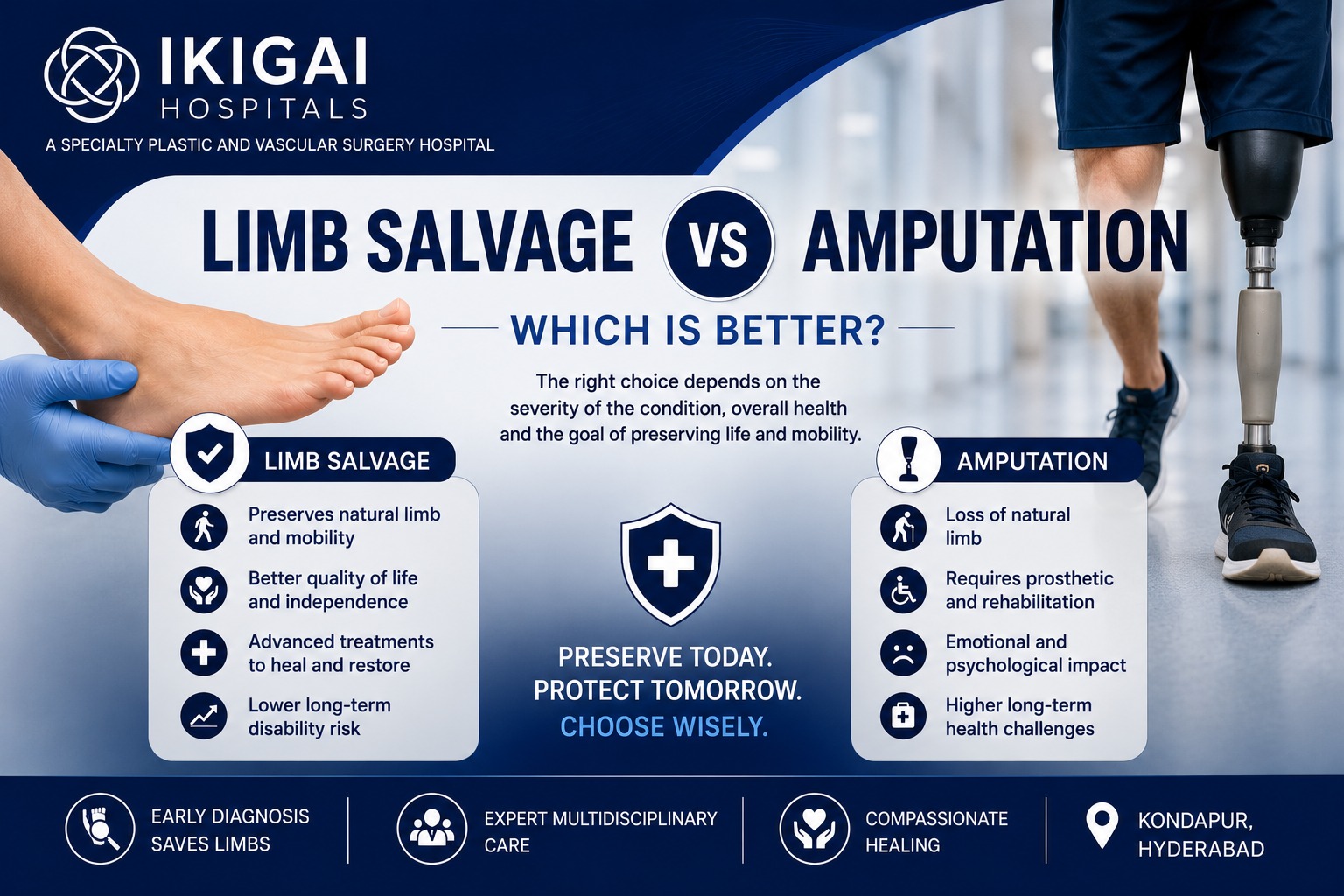
Limb salvage aims to preserve a patient’s natural leg or foot by restoring blood circulation, treating infections, healing wounds, and reconstructing damaged tissue. Amputation involves surgically removing a severely damaged limb when it cannot be safely saved.
Whenever medically possible, limb salvage is generally preferred because it preserves mobility, independence, and quality of life. However, in certain life-threatening situations, amputation may be the safest option.
What Is Limb Salvage?
Limb salvage is a combination of advanced medical and surgical treatments designed to save a leg or foot that is at risk of amputation.
Rather than removing the affected limb, specialists work to restore blood flow, eliminate infection, heal wounds, and preserve as much healthy tissue as possible.
Limb salvage often involves a multidisciplinary team including vascular surgeons, plastic surgeons, wound care specialists, diabetic foot experts, and rehabilitation professionals.
What Is Amputation?
Amputation is the surgical removal of part or all of a limb when it is no longer possible to restore function or when keeping the limb poses a serious risk to the patient’s health.
Although amputation can be life-saving in certain situations, it also has physical, emotional, and psychological impacts. Recovery usually involves rehabilitation, prosthetic fitting, and long-term lifestyle adjustments.
Limb Salvage vs Amputation: What’s the Difference?
| Limb Salvage | Amputation |
|---|---|
| Preserves the natural limb | Removes the damaged limb |
| Restores blood circulation | Removes infected or dead tissue |
| Focuses on wound healing | Requires prosthetic rehabilitation |
| Better long-term mobility in suitable patients | May be required in advanced disease |
| Needs multidisciplinary treatment | Recovery depends on rehab and prosthetics |
Who May Need Limb Salvage?
- Diabetic foot ulcers
- Peripheral Artery Disease (PAD)
- Critical Limb Ischemia
- Non-healing wounds
- Severe foot infections
- Traumatic limb injuries
- Venous ulcers
- Gangrene in early stages
- Chronic osteomyelitis
Benefits of Limb Salvage
- Preserves natural mobility
- Improves quality of life
- Supports better psychological well-being
- Reduces long-term disability
- Allows advanced minimally invasive treatment options
When Is Amputation Necessary?
Although limb salvage is preferred whenever possible, amputation may be necessary when:
- The limb has irreversible tissue death
- Severe infection threatens life
- Blood circulation cannot be restored
- Extensive trauma destroys critical structures
- Cancer affects the limb
- Chronic pain severely limits function
Modern Limb Salvage Treatments
Advances in vascular surgery and wound care have significantly improved limb salvage outcomes.
- Minimally invasive angioplasty and stenting
- Advanced wound care and specialized dressings
- Comprehensive diabetic foot care
- Plastic and reconstructive surgery
- Skin grafting and flap reconstruction
- Targeted infection management and surgical debridement
Recovery and Rehabilitation
Recovery depends on the underlying condition and treatment received.
Patients undergoing limb salvage may require regular wound care, blood sugar control, physiotherapy, vascular follow-up, smoking cessation, and customized footwear.
Patients undergoing amputation often require prosthetic fitting, physical therapy, and long-term rehabilitation.
Can Limb Salvage Prevent Amputation?
Yes. In many patients, early diagnosis combined with advanced vascular care can successfully prevent major amputations. Multidisciplinary limb salvage programs improve healing rates and reduce unnecessary amputations.
When Should You Consult a Specialist?
- A wound that does not heal
- Severe leg pain while walking or at rest
- Black discoloration of the toes
- Foot ulcers
- Swelling with infection
- Loss of sensation
- Cold feet
- Gangrene
- Diabetes-related foot complications
Early intervention can make the difference between limb preservation and amputation.
People Also Ask
Is limb salvage always better than amputation?
Whenever medically possible, limb salvage is generally preferred because it preserves the natural limb and improves quality of life.
Can diabetic foot ulcers be treated without amputation?
Yes. Many diabetic foot ulcers heal successfully with early wound care, vascular treatment, and infection management.
Does poor blood circulation always lead to amputation?
No. Early diagnosis and treatments such as angioplasty, bypass surgery, and wound care can often restore circulation and prevent limb loss.
What specialist performs limb salvage?
A multidisciplinary team including vascular surgeons, plastic surgeons, wound care specialists, and diabetic foot experts often performs limb salvage treatment.
Conclusion
Limb salvage and amputation are both important treatment approaches, but whenever medically possible, preserving the natural limb offers better mobility, independence, and quality of life.
At Ikigai Hospitals, our multidisciplinary team specializes in advanced limb salvage treatments, vascular surgery, diabetic foot care, and wound management to help patients avoid preventable amputations and restore mobility.