

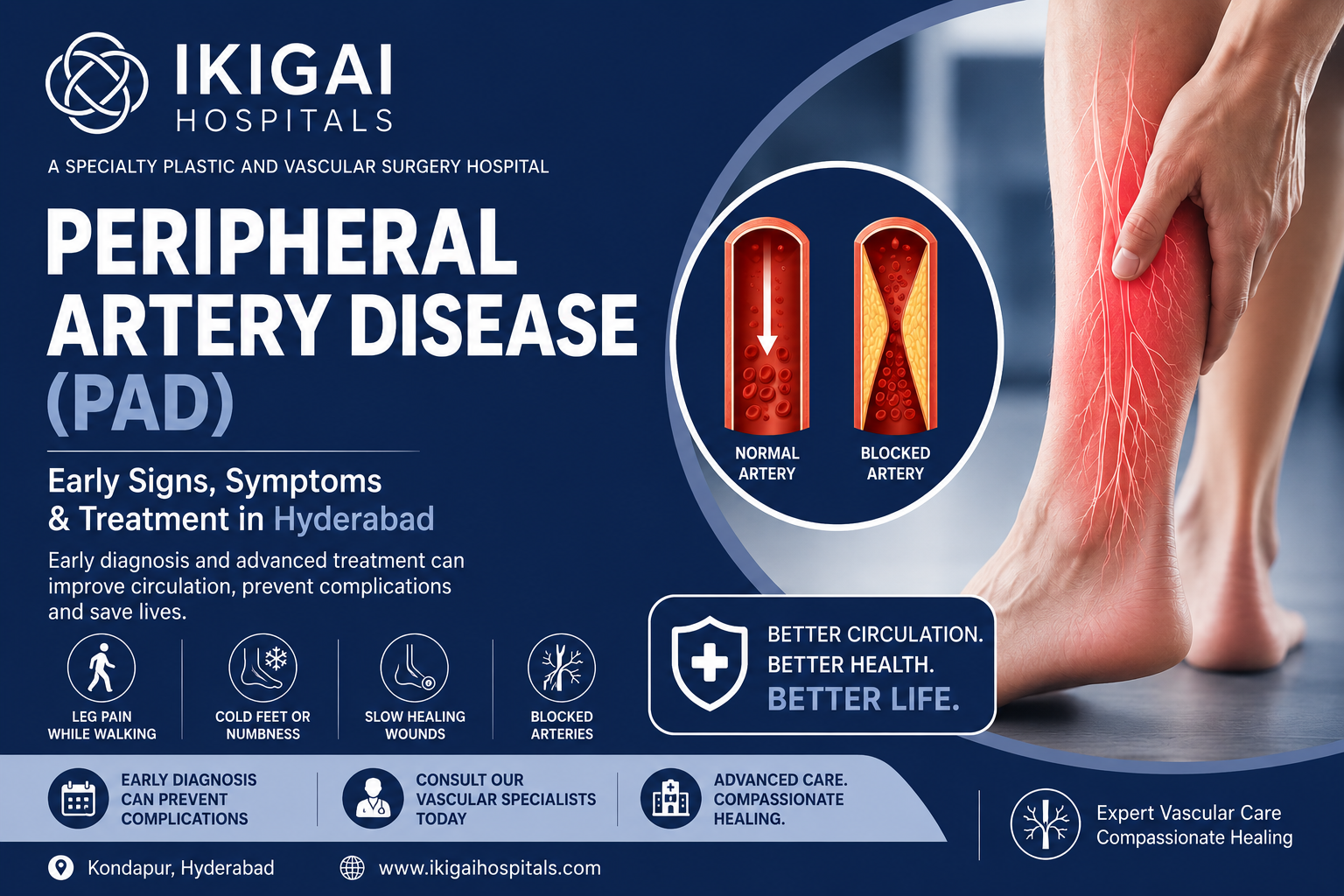
Peripheral Artery Disease: Early Signs, Symptoms & Treatment in Hyderabad
Peripheral Artery Disease: Early Signs, Symptoms & Treatment in Hyderabad
Peripheral Artery Disease (PAD) is a condition in which narrowed arteries reduce blood flow to the legs due to atherosclerosis. Early diagnosis and treatment can improve circulation, prevent limb loss, and reduce the risk of heart attack and stroke.
What is Peripheral Artery Disease?
Peripheral Artery Disease (PAD) is a common circulatory disorder in which arteries supplying blood to the legs become narrowed because of fatty deposits known as atherosclerosis.
Reduced blood flow deprives muscles and tissues of oxygen, causing pain while walking, numbness, cold feet, and slow-healing wounds. PAD is also an indicator of widespread artery disease and increases the risk of heart attack and stroke if left untreated.
What Causes Peripheral Artery Disease?
The most common cause of PAD is atherosclerosis, where fatty deposits build up inside the arteries and block blood flow.
Major risk factors include:
- Diabetes
- Smoking
- High blood pressure
- High cholesterol
- Obesity
- Chronic kidney disease
- Physical inactivity
- Family history of heart disease
Early Signs and Symptoms
- Leg pain while walking (claudication)
- Cold feet or toes
- Numbness or weakness
- Slow-healing wounds
- Skin colour changes
- Hair loss on the legs
- Weak pulse in the feet
These symptoms often start gradually and worsen over time if left untreated.
Who Is at Risk?
People at higher risk of developing PAD include:
- Adults over 50 years
- People with diabetes
- Smokers
- Individuals with high blood pressure
- People with high cholesterol
- Obesity
- Heart disease patients
How Is PAD Diagnosed?
Early diagnosis helps prevent complications. Common tests include:
- Physical examination
- Ankle-Brachial Index (ABI)
- Doppler ultrasound
- CT angiography
- MR angiography
Treatment Options
Treatment usually starts with lifestyle changes and medical management:
- Smoking cessation
- Blood sugar control
- Blood pressure management
- Cholesterol control
- Regular supervised exercise
- Medications to improve blood flow
In advanced cases, minimally invasive vascular procedures may be required, such as:
- Balloon angioplasty
- Stenting
- Vascular bypass surgery
These treatments help restore circulation and reduce the risk of limb loss.
Can PAD Be Prevented?
- Maintain healthy blood sugar levels
- Stop smoking
- Exercise regularly
- Eat a heart-healthy diet
- Control cholesterol and blood pressure
- Maintain a healthy weight
- Undergo regular vascular check-ups
When Should You See a Specialist?
Seek immediate medical evaluation if you have:
- Persistent leg pain while walking
- Foot wounds that do not heal
- Cold or discoloured feet
- Pain even while resting
- Blackened toes
Early treatment can save your limbs and improve overall circulation.
People Also Ask
Is leg pain while walking always PAD?
No, but persistent leg pain should always be evaluated by a vascular specialist.
Can diabetes cause PAD?
Yes. Diabetes significantly increases the risk of developing Peripheral Artery Disease.
Can PAD lead to amputation?
Untreated severe PAD can lead to ulcers, gangrene, and eventually amputation.
Can PAD be treated without surgery?
Yes. Many patients improve with medications, exercise, and minimally invasive vascular procedures.
Conclusion
Peripheral Artery Disease is a serious vascular condition that should not be ignored. Early diagnosis and timely treatment can improve blood flow, reduce pain, and prevent serious complications such as limb loss.
At Ikigai Hospitals, our vascular specialists provide advanced diagnosis, minimally invasive treatment, and comprehensive vascular care to help patients achieve better outcomes.