Varicose Veins in Young Adults: Causes & Early Signs
Varicose Veins in Young Adults: Is It Becoming Common?
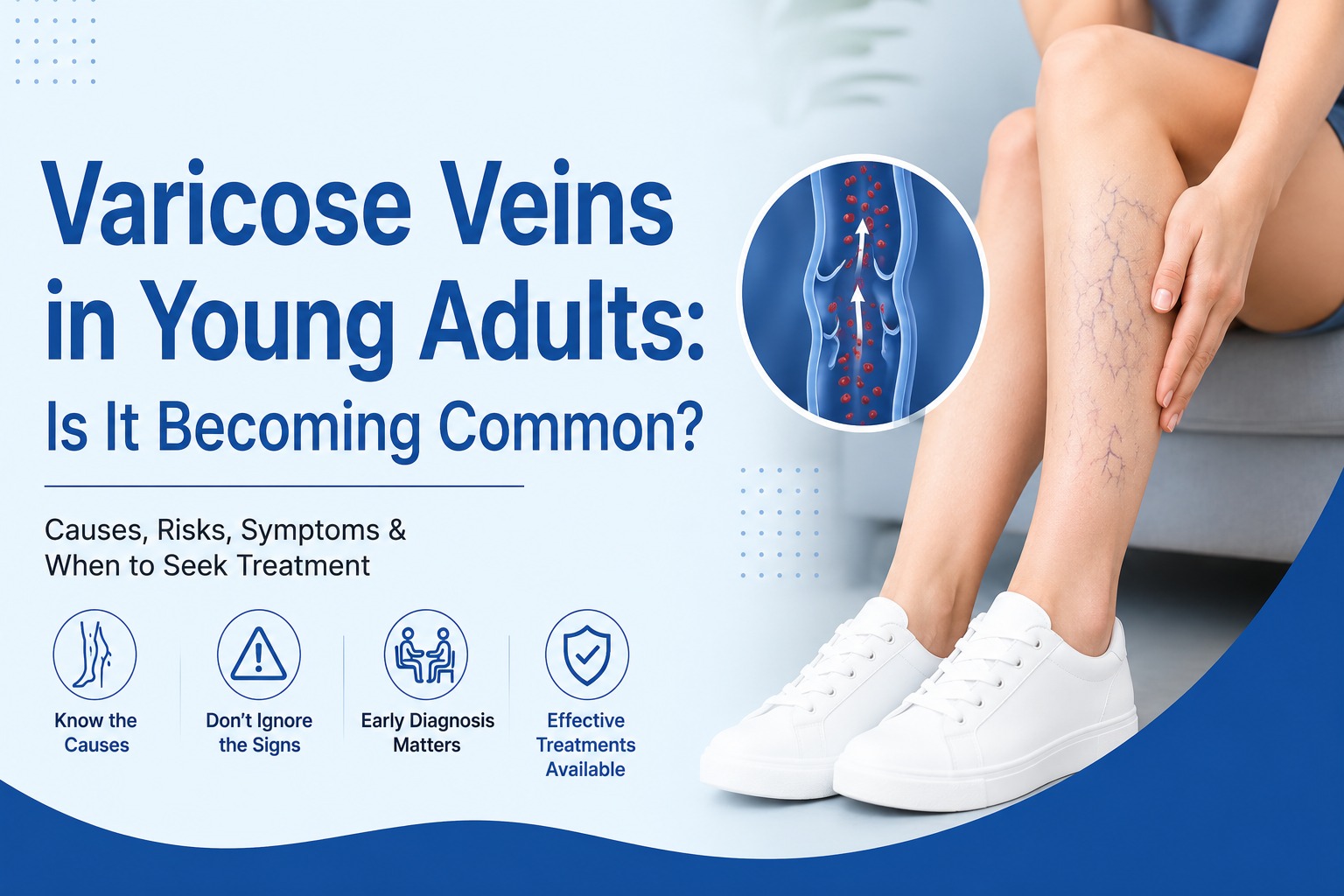
Noticing twisted, enlarged or blue veins on your legs in your 20s or 30s can be surprising. Many people assume varicose veins are a problem that affects only older adults. However, varicose veins in young adults can occur, particularly in people with a family history of venous disease or other risk factors.
Varicose veins develop when valves inside certain leg veins do not work effectively. Blood can flow backwards and collect in the vein, causing it to enlarge and become twisted or bulging.
Age remains an important risk factor for venous disease, so varicose veins generally become more common as people get older. However, younger adults can also develop them. Recent research has specifically examined varicose veins in patients under 40 and has highlighted the possible importance of family history in younger patients.
If visible veins are accompanied by leg heaviness, pain, swelling, itching or skin changes, a vascular evaluation may help identify the underlying problem.
What Are Varicose Veins?
Direct Answer: Varicose veins are enlarged, twisted veins that usually develop in the legs. They occur when valves inside the veins do not work properly, allowing blood to collect in the vein instead of moving efficiently back towards the heart.
Veins are blood vessels that carry blood back to the heart. The veins in the legs work against gravity and contain one-way valves that help keep blood moving upwards.
When these valves become weak or damaged, some blood may flow backwards. This is known as venous reflux.
Over time, increased pressure inside the vein can cause it to stretch and become enlarged.
Varicose veins may appear:
- Blue or purple
- Twisted or rope-like
- Raised above the skin
- Bulging when standing
- More noticeable around the calf or thigh
Some people have visible varicose veins without significant discomfort. Others may experience aching, heaviness, swelling, itching or skin changes. Learn more about chronic venous insufficiency.
Are Varicose Veins Becoming Common in Young Adults?
Direct Answer: Varicose veins are not limited to older people. Young adults can develop them, although the overall risk generally increases with age. Family history, pregnancy, body weight and long periods of standing or sitting may contribute to venous problems in younger adults.
It is difficult to state that varicose veins are universally "increasing" among all young adults without reliable age-specific population data, particularly for India.
However, varicose veins in people below 40 are recognised in medical practice and research.
A 2025 study examining varicose veins in patients under 40 reported that family history appeared more frequently among younger patients in the study population. The findings should not be used to estimate how common the condition is among all young adults, but they support the importance of genetic or familial factors in some younger patients.
At the same time, modern work and lifestyle patterns may expose some people to recognised venous risk factors.
These include:
- Long working hours while standing
- Prolonged desk work
- Reduced physical movement
- Excess body weight
- Pregnancy
- Family history of varicose veins
The important point is simple: being young does not rule out varicose veins or venous reflux.
What Causes Varicose Veins in Young Adults?
Direct Answer: Varicose veins in young adults usually develop when the valves in the leg veins do not function effectively. Genetics, prolonged standing or sitting, pregnancy and excess body weight may increase the likelihood of developing visible or symptomatic veins.
1. Family History
Genetics may play an important role in varicose veins.
If close family members have varicose veins or chronic venous disease, your own risk may be higher.
You cannot identify the exact cause of visible veins based only on family history. However, a strong family history is useful information to share with a vascular specialist.
2. Long Hours of Standing
Professionals who spend much of the working day standing may experience increased pressure in the veins of the legs.
This can be relevant for:
- Healthcare workers
- Teachers
- Retail employees
- Hospitality professionals
- Security personnel
- Factory workers
- Salon professionals
Standing itself does not mean that everyone will develop varicose veins. Individual risk factors also matter.
3. Sitting for Long Periods
Desk jobs, work-from-home routines and long periods of limited movement may reduce the action of the calf muscles.
The calf muscles act as a type of pump that helps move venous blood upwards from the legs.
Regular movement is important for healthy circulation.
4. Pregnancy and Hormonal Factors
Pregnancy can increase pressure on the veins in the legs. Changes in blood volume and hormonal factors may also influence the veins.
Some pregnancy-related varicose veins may improve after delivery. Persistent or symptomatic veins may require medical evaluation.
5. Excess Body Weight
Excess body weight may increase pressure on the veins in the legs.
Weight is only one risk factor. People with a healthy body weight can also develop varicose veins, particularly when genetic or other venous factors are present.
6. Previous Venous Problems
A history of deep vein thrombosis or other venous conditions may affect normal blood flow in the legs.
Anyone with previous blood clots and new leg symptoms should discuss them with a doctor.
What Are the Early Signs of Varicose Veins?
Direct Answer: Early signs of varicose veins may include visible blue or purple veins, aching legs, heaviness, ankle swelling, itching and discomfort after standing for long periods. Symptoms may become more noticeable towards the end of the day.
Common symptoms include:
- Visible twisted or enlarged veins
- Aching or discomfort in the legs
- A heavy feeling in the legs
- Swelling around the ankles
- Itching around visible veins
- Leg cramps
- Burning or throbbing sensations
- Symptoms that worsen after prolonged standing
- Skin colour changes around the lower leg in more advanced venous disease
Not everyone experiences the same symptoms.
A small visible vein does not automatically indicate severe venous disease. Similarly, significant venous reflux may require proper assessment rather than judging the condition only by appearance. Learn more about leg swelling and poor circulation.
Are Varicose Veins Dangerous in Young Adults?
Direct Answer: Varicose veins are not always dangerous. However, persistent venous disease can sometimes lead to complications such as skin changes, bleeding, inflammation or venous ulcers. Sudden leg swelling or significant pain requires prompt medical evaluation to rule out other conditions.
For some young adults, varicose veins are mainly a cosmetic concern.
For others, they may cause ongoing symptoms.
Possible complications of venous disease can include:
- Persistent leg swelling
- Skin pigmentation
- Inflammatory skin changes
- Bleeding from a varicose vein
- Superficial vein inflammation
- Venous leg ulcers
Sudden swelling in one leg, significant pain, warmth or redness should not automatically be assumed to be "just varicose veins". These symptoms may require urgent assessment for other vascular problems, including a possible blood clot.
Can Varicose Veins Go Away Naturally?
Direct Answer: Established varicose veins usually do not disappear completely on their own because the underlying vein valve problem may remain. Lifestyle measures may help manage symptoms and support circulation, but persistent or symptomatic varicose veins may need specialist evaluation.
Walking, weight management and avoiding long periods of inactivity may improve leg comfort.
Leg elevation may also help some people with swelling or heaviness.
However, these measures do not necessarily repair damaged vein valves.
This is why visible veins that continue to enlarge or cause symptoms should be assessed rather than repeatedly ignored.
How Are Varicose Veins Diagnosed?
Direct Answer: Varicose veins are usually assessed through a medical history, examination of the legs and, when clinically appropriate, a duplex ultrasound. The scan helps evaluate blood flow and identify abnormal backward flow in the veins.
Step-by-Step Varicose Vein Assessment
1. Discuss your symptoms
The doctor may ask about pain, swelling, heaviness, itching and when the symptoms become worse.
2. Review your medical and family history
Pregnancy history, previous blood clots and a family history of varicose veins may be relevant.
3. Examine the legs
Visible veins, swelling and skin changes may be assessed.
4. Perform a duplex ultrasound when indicated
This non-invasive ultrasound evaluates the structure of veins and blood flow.
5. Plan treatment based on the diagnosis
The treatment approach depends on the veins involved, the presence of reflux, symptoms and individual health factors.
What Is a Duplex Ultrasound?
A duplex ultrasound for leg veins uses sound waves to create images of blood vessels and assess blood flow.
In varicose vein assessment, it can help doctors identify veins with abnormal valve function and map the pattern of venous reflux.
A duplex ultrasound is important because treatment planning should be based on the underlying venous problem, not only on the appearance of the veins.
How Are Varicose Veins in Young Adults Treated?
Direct Answer: Treatment for varicose veins depends on symptoms, ultrasound findings and the veins involved. Management may include lifestyle measures, compression therapy or vein procedures such as sclerotherapy and endovenous treatment when recommended after specialist assessment.
There is no single treatment suitable for every patient.
Lifestyle and Symptom Management
For some patients, initial management may include:
- Regular walking
- Avoiding prolonged periods of inactivity
- Taking movement breaks during desk work
- Maintaining a healthy body weight
- Elevating the legs when appropriate
These measures may help reduce symptoms but may not remove established varicose veins.
Compression Therapy
Compression stockings apply controlled pressure to the legs.
They may help some patients manage swelling or discomfort.
The correct type and level of compression should be selected based on individual clinical factors. Compression stockings are not a substitute for proper assessment when symptoms are persistent or worsening.
Sclerotherapy
Sclerotherapy involves injecting a specialised solution or foam into selected veins to close them.
It may be considered for certain types of varicose or superficial veins.
Suitability depends on the pattern of venous disease.
Endovenous Laser Treatment
Endovenous laser treatment uses thermal energy delivered inside an affected vein to close it.
The body then redirects blood through functioning veins.
A vascular specialist may consider endovenous treatment when ultrasound confirms suitable venous reflux.
Radiofrequency Ablation
Radiofrequency ablation also uses controlled thermal energy to close an affected vein.
The choice between treatment methods depends on the patient's venous anatomy, diagnosis and clinical factors.
Other Vascular Procedures
Other procedures may be considered for selected veins or patterns of venous disease.
The appropriate treatment plan should be based on clinical examination and ultrasound findings. Explore varicose vein treatment in Hyderabad.
Comparison Table
| Treatment/Approach | How It Works | Suitable For | Key Considerations |
|---|---|---|---|
| Lifestyle measures | Supports leg movement and venous circulation | Mild symptoms or supportive care | May reduce symptoms but may not remove established varicose veins |
| Compression therapy | Applies controlled pressure to the legs | Selected patients with swelling or discomfort | Correct compression should be chosen based on individual factors |
| Sclerotherapy | Closes selected veins using an injected solution or foam | Certain superficial or varicose veins | Suitability depends on vein type and assessment |
| Endovenous laser treatment | Uses thermal energy inside the vein | Selected veins with confirmed venous reflux | Usually planned after ultrasound evaluation |
| Radiofrequency ablation | Uses controlled heat to close an affected vein | Selected patients with suitable vein anatomy | Treatment depends on diagnosis and individual factors |
Is Varicose Vein Treatment Painful?
Direct Answer: The level of discomfort depends on the treatment performed and the individual patient. Many modern vein procedures are minimally invasive, but patients may still experience temporary discomfort, bruising or tenderness. Your vascular specialist should explain the expected experience before treatment.
Pain should not be the only factor when choosing treatment.
The underlying vein problem, ultrasound findings and the patient's overall health are also important.
Ask your doctor about:
- Anaesthesia or pain control
- Expected discomfort
- Possible bruising
- Activity restrictions
- Follow-up care
How Long Does Recovery Take After Varicose Vein Treatment?
Direct Answer: Recovery time varies depending on the procedure, number and size of veins treated, and the patient's overall health. Some minimally invasive treatments may allow an earlier return to routine activities than traditional surgery, but individual recovery instructions should always be followed.
Do not compare your recovery directly with another patient's experience.
Your doctor may advise you about walking, exercise, work and compression use after treatment.
Can Young Adults Prevent Varicose Veins?
Direct Answer: Varicose veins cannot always be prevented, particularly when family history or other underlying risk factors are present. Regular movement, healthy weight management and avoiding long periods of inactivity may support venous circulation and help manage certain risk factors.
Practical habits include:
- Walk regularly
- Take movement breaks during desk work
- Avoid sitting continuously for several hours
- Change position if your work requires prolonged standing
- Maintain a healthy body weight
- Discuss persistent leg symptoms with a doctor
If you already have visible veins, preventive habits should not replace medical evaluation when pain, swelling or skin changes are present.
What Happens If Varicose Veins Are Left Untreated?
Direct Answer: Not every varicose vein will cause serious complications. However, persistent venous disease can worsen in some people and may lead to increasing symptoms, skin changes, bleeding or venous ulcers. Regular or worsening symptoms should be medically assessed.
Signs of progression may include:
- Increasing leg swelling
- Worsening pain or heaviness
- Darkening of the skin
- Persistent itching or inflammatory skin changes
- Bleeding from a superficial vein
- A wound near the ankle that is slow to heal
Early evaluation can help determine whether symptoms are related to venous reflux or another cause. Learn about non-healing leg wounds.
Key Takeaways
- Varicose veins can occur in young adults and are not limited to older people.
- Weak or poorly functioning vein valves can allow blood to flow backwards and collect in the leg veins.
- Family history may be particularly relevant in some younger patients with varicose veins.
- Early symptoms can include visible veins, leg heaviness, aching, swelling and itching.
- Duplex ultrasound can help assess blood flow and identify venous reflux when clinically indicated.
- Treatment depends on symptoms, vein anatomy, ultrasound findings and individual patient factors.
When to See a Doctor
Direct Answer: Consider consulting a vascular specialist if varicose veins are causing persistent pain, swelling, heaviness, itching or skin changes. Bleeding veins or a non-healing leg ulcer require medical assessment. Sudden one-sided leg swelling or significant pain should be evaluated promptly.
Seek medical advice if you notice:
- Persistent leg pain or heaviness
- Regular ankle or leg swelling
- Increasingly prominent veins
- Skin darkening around the ankle
- Persistent itching or skin inflammation
- Bleeding from a visible vein
- A wound that is not healing
- Sudden swelling in one leg
- Significant unexplained leg pain
A vascular surgeon in Hyderabad or vascular specialist can assess blood vessels and venous circulation and recommend further tests when required.
If you are young and experiencing persistent leg heaviness, swelling or visible bulging veins, do not judge the condition only by your age. A vascular evaluation can help identify whether venous reflux or another condition is contributing to your symptoms.
Frequently Asked Questions
Can you get varicose veins in your 20s?
Yes. Although the likelihood of varicose veins generally increases with age, people in their 20s can develop them. Family history, pregnancy and other venous risk factors may contribute. Persistent visible veins accompanied by pain, swelling or heaviness should be medically assessed.
Why do I have varicose veins at a young age?
Varicose veins at a young age may be associated with weak vein valves, family history, pregnancy, excess body weight or prolonged periods of standing or limited movement. The exact reason can differ between patients, and an examination may be needed to identify the underlying venous problem.
Are varicose veins dangerous for young adults?
Varicose veins are not always dangerous. However, some people develop ongoing swelling, skin changes, bleeding or venous ulcers. Sudden leg swelling or significant pain requires prompt medical evaluation because other vascular conditions may cause similar symptoms.
Can exercise remove varicose veins?
Exercise can support calf muscle activity and venous circulation, but it usually does not make established varicose veins disappear completely. Regular walking may help manage some symptoms. Persistent or painful veins may require evaluation by a vascular specialist.
Can sitting all day cause varicose veins?
Prolonged inactivity may affect normal leg circulation and is considered a relevant venous risk factor. However, varicose veins usually develop through a combination of factors. Family history, pregnancy, body weight and vein valve function may also be important.
Which doctor should I consult for varicose veins?
A vascular surgeon or vascular specialist evaluates conditions affecting veins and blood circulation. Depending on your symptoms, the specialist may perform a clinical examination and recommend a duplex ultrasound to assess blood flow and vein valve function.
How do doctors check blood flow in leg veins?
Doctors may use a duplex ultrasound to assess blood flow and the structure of the veins. The scan uses sound waves and can help identify abnormal backward blood flow, known as venous reflux, when evaluating varicose veins.
Do varicose veins go away with weight loss?
Weight management may reduce pressure on the leg veins and support overall vascular health. However, established varicose veins may not disappear completely with weight loss because damaged or poorly functioning vein valves may remain.
Is varicose vein treatment painful?
Discomfort varies according to the procedure and the individual patient. Minimally invasive vein treatments may still cause temporary tenderness, bruising or discomfort. The treating specialist should explain pain management, expected recovery and possible side effects before treatment.
When should I worry about visible veins in my legs?
Seek medical advice if visible veins are associated with persistent pain, swelling, skin colour changes, bleeding or a non-healing wound. Sudden swelling in one leg or significant unexplained pain should be evaluated promptly rather than assumed to be ordinary varicose veins.
Conclusion
Varicose Veins in Young Adults Should Not Be Ignored Because of Age
Varicose veins in young adults can occur, particularly when underlying vein valve problems or recognised risk factors are present.
While age remains an important risk factor for venous disease, being in your 20s or 30s does not rule out varicose veins.
Visible veins without symptoms may not always require immediate intervention. However, persistent leg pain, heaviness, swelling, itching, skin changes or increasing veins deserve proper assessment.
A vascular examination and, when appropriate, duplex ultrasound can help identify the underlying venous problem.
Treatment should be selected according to the diagnosis, symptoms, vein anatomy and individual patient factors.
Young and noticing painful or bulging leg veins?
Persistent leg heaviness, swelling or visible veins may need more than self-care. A vascular evaluation can help identify whether an underlying vein problem is contributing to your symptoms.
If you are experiencing persistent leg pain, swelling, heaviness, visible bulging veins or changes in the skin around your ankles, a vascular evaluation may help identify the underlying cause.
Patients in Hyderabad can consult the vascular care in Hyderabad team at Ikigai Hospitals for assessment and an individualised treatment plan based on their condition and diagnostic findings.
Early medical evaluation is particularly important when symptoms are worsening, affecting daily activities or accompanied by skin changes.