Venous Ulcers: Causes, Symptoms & Treatment
Venous Ulcers: Causes, Symptoms & Treatment
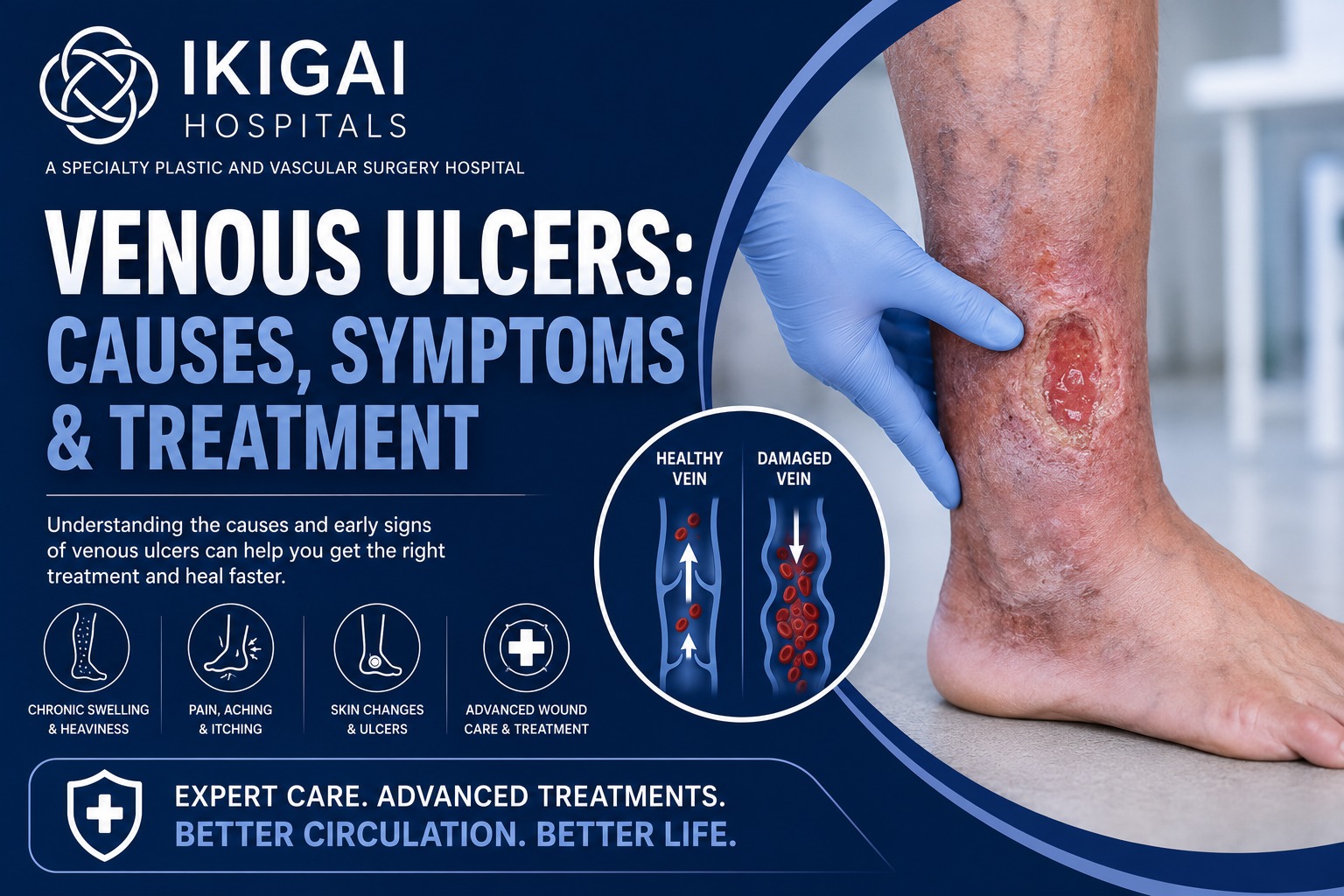
Venous ulcers are open wounds that usually develop around the ankle because of poor blood flow in the leg veins (chronic venous insufficiency). Early diagnosis, compression therapy, advanced wound care, and treatment of the underlying vein disease can help most ulcers heal successfully.
What is a Venous Ulcer?
A venous ulcer is the most common type of chronic leg ulcer. It develops when damaged leg veins cannot efficiently return blood to the heart, causing increased pressure inside the veins.
Over time, this pressure damages the skin and underlying tissues, resulting in an open wound, usually near the inner ankle. These ulcers can heal with proper vascular treatment and advanced wound care.
Causes of Venous Ulcers
The leading cause of venous ulcers is chronic venous insufficiency. Other contributing factors include:
- Varicose veins
- Previous deep vein thrombosis (DVT)
- Obesity
- Prolonged standing
- Pregnancy
- Ageing
- Poor mobility
- Previous leg injuries
Signs and Symptoms
- Persistent swelling of the lower leg
- Brown or dark skin discoloration
- Heavy or aching legs
- Itching or dry skin
- Open wound near the ankle
- Fluid discharge
- Pain or tenderness
These symptoms should not be ignored, as untreated venous ulcers can worsen and become infected.
Who Is at Risk?
People at higher risk include:
- People with varicose veins
- Patients with chronic venous insufficiency
- Individuals with obesity
- People with prolonged standing jobs
- Previous DVT patients
- Reduced mobility
- Age above 50 years
Diagnosis
Proper diagnosis is important for effective treatment. This may include:
- Clinical examination
- Duplex Doppler Ultrasound to assess venous blood flow
- Ankle-Brachial Index (ABI) to check arterial circulation
- Additional tests if infection is suspected
Treatment Options
Successful treatment focuses on healing the ulcer and correcting the underlying vein problem.
- Compression therapy (main treatment)
- Advanced wound dressings
- Infection control and antibiotics if needed
- Leg elevation
- Regular walking
- Healthy lifestyle changes
Minimally invasive vascular treatments may also be recommended, including:
- Endovenous Laser Therapy (EVLT)
- Radiofrequency Ablation (RFA)
- Foam Sclerotherapy
These treatments help close damaged veins and reduce ulcer recurrence.
Prevention
- Treat varicose veins early
- Wear compression stockings if advised
- Exercise regularly
- Elevate your legs after prolonged standing
- Maintain a healthy weight
- Avoid smoking
- Seek medical attention for persistent swelling or skin changes
When Should You See a Specialist?
Consult a vascular specialist if you have:
- A leg wound that does not heal within two weeks
- Persistent swelling
- Ankle skin discoloration
- Increasing pain
- Foul-smelling discharge
- Fever
- Recurrent ulcers
Early treatment improves healing and prevents complications.
People Also Ask
Can venous ulcers heal completely?
Yes. Most venous ulcers heal successfully with compression therapy, advanced wound care, and treatment of the underlying vein disease.
Can varicose veins cause venous ulcers?
Yes. Untreated varicose veins may progress to chronic venous insufficiency and ulcer formation.
Can venous ulcers return?
Yes. Recurrence is common if the underlying vein disease is not treated properly.
Is walking good for venous ulcers?
Yes. Walking improves calf muscle function and helps improve venous circulation.
Conclusion
Venous ulcers are a common but treatable condition caused by poor venous circulation. Early diagnosis, proper compression therapy, advanced wound care, and treatment of the underlying vein disease can help most ulcers heal successfully.
At Ikigai Hospitals, our vascular specialists provide advanced venous ulcer care, minimally invasive vein treatments, and comprehensive wound management to improve healing and prevent recurrence.