

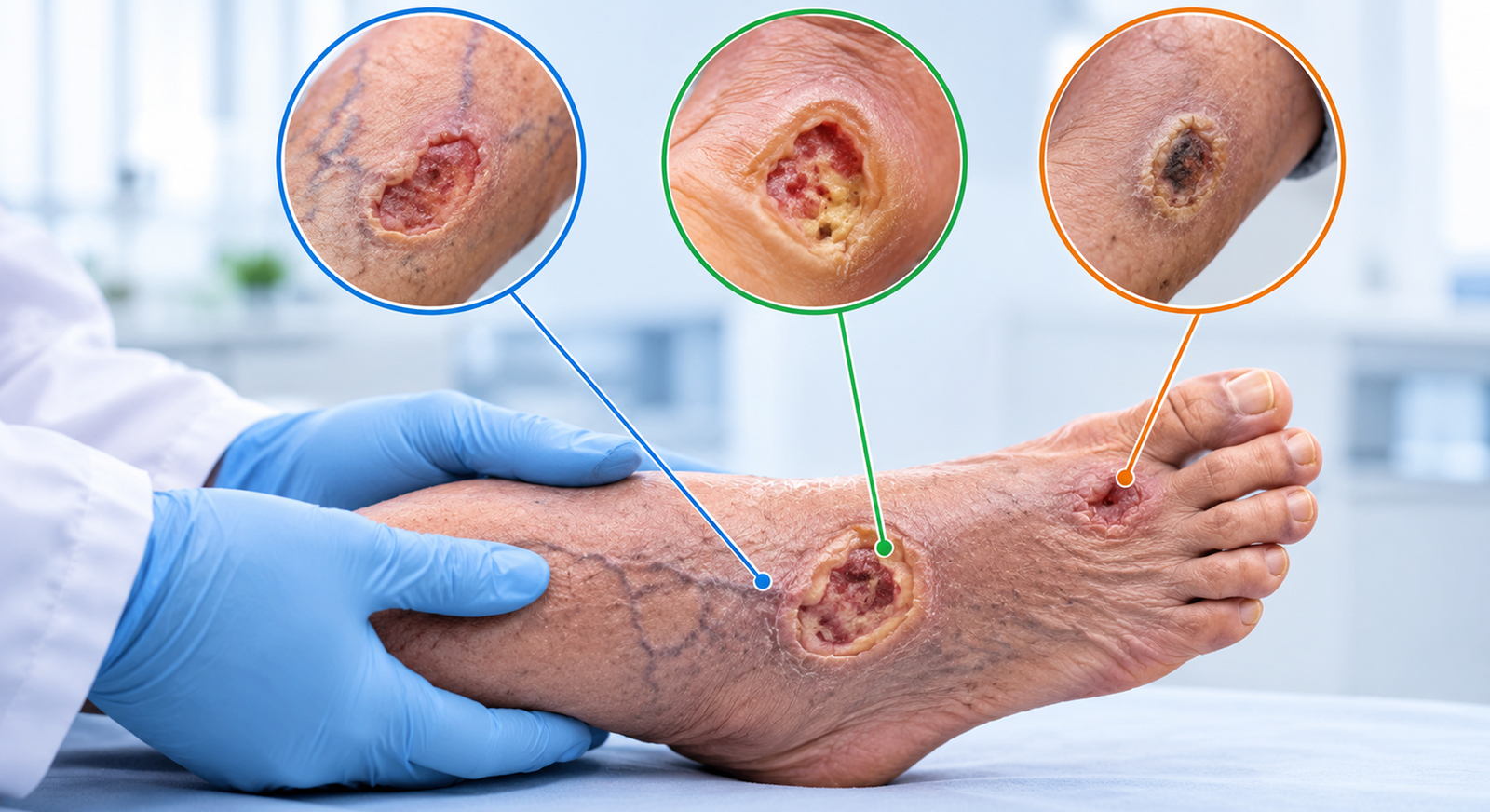
Venous, diabetic and arterial ulcers are all chronic wounds of the leg or foot, but each has a different cause. Venous ulcers come from poor blood return in the veins and usually appear above the inner ankle as shallow, moist wounds with swelling. Diabetic ulcers are caused mainly by nerve damage and pressure, and form on the soles, toes or heels, often painlessly. Arterial ulcers are caused by blocked arteries that reduce blood supply. They typically appear on the toes or outer ankle as deep, dry, “punched-out” wounds that are very painful. Correct identification matters because the treatments differ, and the wrong treatment can make a wound worse.
What Is a Leg Ulcer?
A leg ulcer is an open wound on the leg or foot that takes more than two to four weeks to heal. Unlike a normal cut, it doesn’t close on its own because something underneath, such as poor circulation, nerve damage or long-term pressure, keeps blocking the healing process.
Venous, diabetic and arterial ulcers account for most chronic leg and foot wounds. They can look alike at first glance, but they behave differently and need different care. Knowing the differences helps patients recognise warning signs early and get the right specialist treatment.
What Is a Venous Ulcer?
Venous ulcers are the most common type of leg ulcer. They develop when the valves inside the leg veins stop working properly, a condition called chronic venous insufficiency. Instead of flowing back to the heart, blood pools in the lower legs. Pressure builds up, fluid leaks into the surrounding tissue, and over time the skin breaks down.
Common Causes and Risk Factors
- Varicose veins
- A history of deep vein thrombosis (DVT)
- Standing or sitting for long periods
- Obesity
- Multiple pregnancies
- Ageing and reduced calf-muscle activity
- Previous leg injury or surgery
How Venous Ulcers Look and Feel
- Usually located above the inner ankle (the gaiter area)
- Shallow, with irregular edges
- Moist, often with heavy fluid drainage
- Red, healthy-looking wound base
- Swelling of the leg that worsens by evening
- Brownish discolouration, thick or hardened skin, itching or eczema around the area
- Mild to moderate aching, which often improves when the leg is raised
What Is a Diabetic Ulcer?
A diabetic ulcer, often called a diabetic foot ulcer, occurs in people with diabetes, mostly because of peripheral neuropathy (nerve damage). Loss of sensation means injuries, blisters and pressure points go unnoticed. Repeated pressure from walking breaks the skin, and high blood sugar slows healing and raises the risk of infection. Many diabetic patients also have reduced circulation, which makes healing even harder.
Common Causes and Risk Factors
- Long-standing or poorly controlled diabetes
- Nerve damage (numbness, tingling, burning)
- Foot deformities such as bunions, hammer toes or Charcot foot
- Calluses and pressure points
- Ill-fitting footwear or walking barefoot
- Previous ulcers or amputations
- Smoking and kidney disease
How Diabetic Ulcers Look and Feel
- Found on pressure points: the ball of the foot, under the big toe, the toes or the heel
- Round, often surrounded by a thick callus
- Depth can range from shallow to deep, sometimes reaching bone
- Often painless or much less painful than expected because of nerve damage
- Drainage may be noticed on socks before the wound itself is seen
- Signs of infection may include redness, warmth, swelling and a foul smell
What Is an Arterial Ulcer?
Arterial ulcers, also called ischemic ulcers, are caused by peripheral arterial disease (PAD), a narrowing or blockage of the arteries that carry oxygen-rich blood to the legs and feet. Without enough blood supply, tissue starves and breaks down, and even minor injuries cannot heal.
Common Causes and Risk Factors
- Smoking (the single biggest risk factor)
- Diabetes
- High blood pressure
- High cholesterol
- Ageing
- Kidney disease
- A family history of heart or vascular disease
How Arterial Ulcers Look and Feel
- Typically on the toes, tips of the toes, heels, outer ankle or top of the foot
- Deep, round, with a “punched-out” appearance and well-defined edges
- Dry, pale, grey or black wound base, with little drainage
- Cold foot, shiny and hairless skin, thickened toenails
- Weak or absent foot pulses
- Severe pain, especially at night or when the leg is raised, often eased by hanging the leg down
- Pain in the calf while walking (claudication) is a common early sign
Venous vs Diabetic vs Arterial Ulcer: Comparison Table
| Feature | Venous Ulcer | Diabetic Ulcer | Arterial Ulcer |
|---|---|---|---|
| Main cause | Poor vein function (venous insufficiency) | Nerve damage and pressure in diabetes | Blocked or narrowed arteries (PAD) |
| Common location | Above the inner ankle | Soles, toes, heels (pressure points) | Toes, heels, outer ankle, top of foot |
| Appearance | Shallow, irregular edges | Round, surrounded by callus | Deep, “punched-out,” well-defined |
| Wound base | Red, moist | Variable; can be deep | Pale, grey or black, dry |
| Drainage | Heavy | Moderate | Minimal |
| Pain level | Mild to moderate | Often painless | Severe |
| Effect of raising the leg | Pain improves | No major change | Pain worsens |
| Surrounding skin | Swollen, brown, hardened | Dry, cracked, calloused | Cold, shiny, hairless |
| Foot pulses | Usually present | Variable | Weak or absent |
| Key treatment | Compression and vein treatment | Offloading and blood sugar control | Restoring blood flow |
Can a Patient Have More Than One Type of Ulcer?
Yes. Many patients, especially older adults and people with diabetes, have mixed ulcers. A person with diabetes may also have arterial disease, or a patient with venous problems may develop arterial narrowing with age. Mixed ulcers are harder to treat because therapies need to be balanced. For example, compression bandaging helps venous ulcers but can be dangerous when arterial blood flow is poor. This is why a proper vascular assessment is essential before treatment begins.
How Are Leg Ulcers Diagnosed?
Accurate diagnosis is the foundation of healing. A specialist may use:
- Physical examination of the wound’s location, size, depth and surrounding skin
- Ankle-Brachial Index (ABI) to compare blood pressure in the ankle and arm and check arterial flow
- Venous Doppler ultrasound to assess vein valves and detect reflux or past clots
- Arterial Doppler or angiography to locate blockages
- Nerve sensation testing for diabetic neuropathy
- Blood tests, including blood sugar and HbA1c
- X-ray or MRI if bone infection is suspected
- Wound swab or biopsy to identify infection or rule out other causes
Treatment Differences: Why the Right Diagnosis Matters
Venous Ulcer Treatment
- Compression therapy (bandages or stockings) to improve blood return
- Leg elevation and regular walking
- Advanced wound dressings
- Treatment of the underlying vein problem, such as minimally invasive procedures like laser or radiofrequency ablation, to lower the chance of recurrence
Diabetic Ulcer Treatment
- Offloading pressure with special footwear, casts or braces
- Debridement to remove dead tissue
- Infection control and antibiotics when needed
- Strict blood sugar management
- Surgical treatment for deep wounds, deformities or bone infection
- Circulation assessment, as many diabetic patients also need vascular care
Arterial Ulcer Treatment
- Restoring blood flow is the priority, through angioplasty, stenting or bypass surgery
- Careful wound care, often avoiding aggressive debridement until circulation improves
- Pain management
- Controlling risk factors: stopping smoking, and managing blood pressure, cholesterol and diabetes
- Compression is usually avoided
Using the wrong approach, such as compression on an arterial ulcer, can delay healing or cause serious harm. That’s why evaluation by a Wound Care Specialist in Kondapur with vascular expertise is so important.
Warning Signs That Need Urgent Medical Attention
See a doctor immediately if you notice:
- A wound that hasn’t improved in two weeks
- Spreading redness, warmth or swelling
- Fever or chills
- Foul-smelling discharge
- Black or dead-looking tissue
- A cold, pale or bluish foot
- Sudden severe pain in the leg or foot
Early treatment can prevent infection, gangrene and amputation.
Conclusion: Get the Right Diagnosis and the Right Care at Ikigai Hospitals
Venous, diabetic and arterial ulcers may look similar, but each has a different cause and needs a different treatment plan. A wound that won’t heal is your body’s signal that something deeper, such as vein disease, nerve damage or blocked arteries, needs attention. The sooner the true cause is identified, the faster and safer the healing.
At Ikigai Hospitals, we offer a complete, team-based approach to chronic wound care, bringing vascular diagnostics, advanced wound management and surgical expertise together under one roof.
Dr. Viswanath Atreyapurapu, Vascular and Endovascular Surgeon, specialises in diagnosing and treating venous and arterial disease, from varicose vein treatment to restoring blood flow in blocked arteries, which helps stubborn ulcers heal and lowers the risk of recurrence.
Dr. Manikanth Karumuri, Aesthetic, Reconstructive, Plastic and Diabetic Foot Surgeon, focuses on diabetic foot ulcer management, wound reconstruction and limb-saving surgical care.
If you are looking for an experienced Vascular Surgeon in Hyderabad, or expert care for a wound that just won’t heal, our specialists are here to help.
Book your consultation at Ikigai Hospitals today, and get an accurate diagnosis, the right treatment and a clear path to healing.
Medical Disclaimer
The information in this article is for general educational purposes only and is not a substitute for professional medical advice, diagnosis or treatment. Leg and foot ulcers can have overlapping features, and only a qualified doctor can determine the exact type and the right treatment after a proper clinical examination and tests. Do not self-treat chronic wounds or use compression without medical advice. If you notice signs of infection, tissue discolouration or worsening pain, seek medical care promptly. Do not ignore professional medical advice or delay seeking it because of something you have read online.