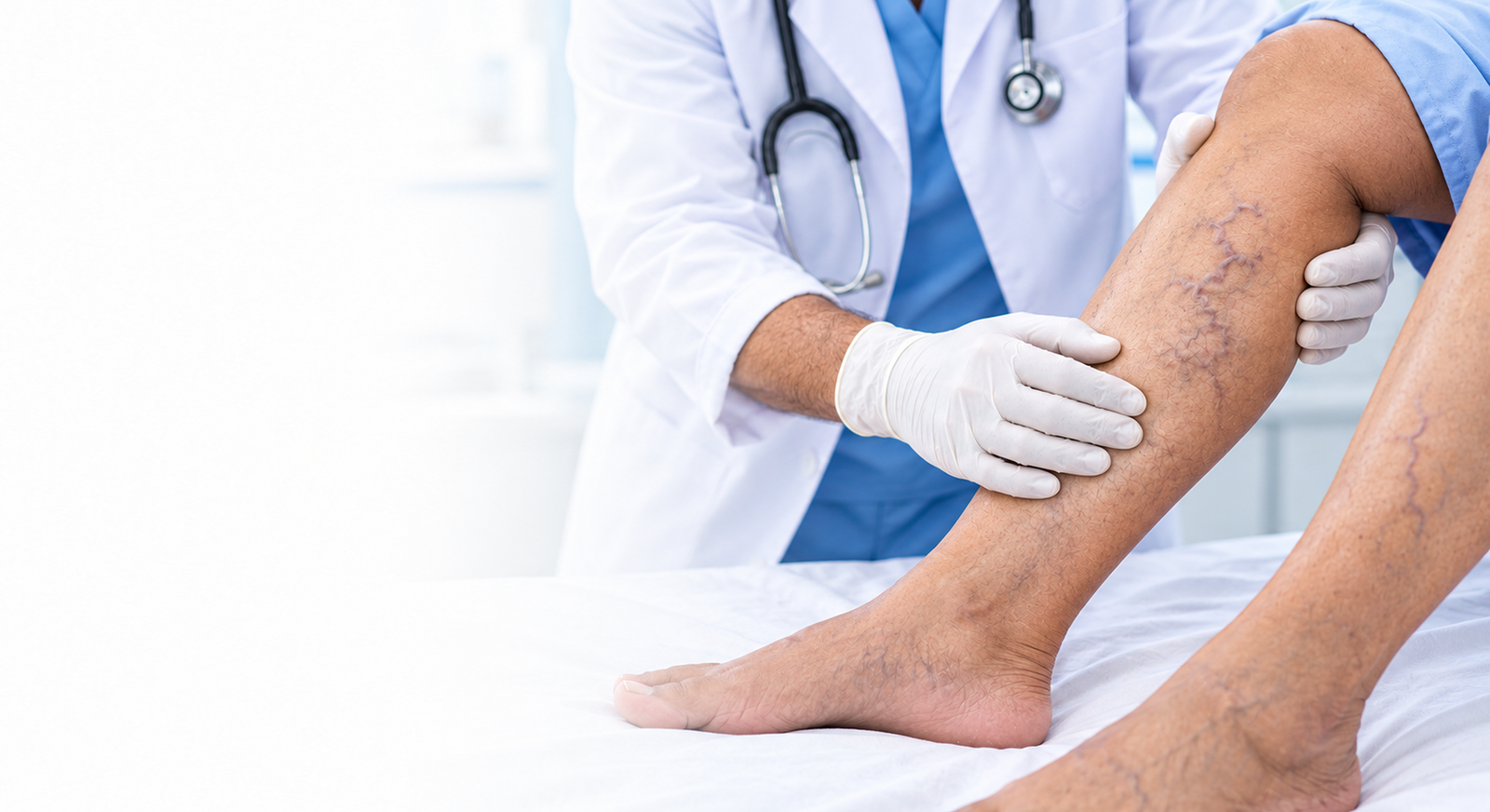
Varicose veins are swollen, twisted veins—usually in the legs—that develop when faulty vein valves allow blood to pool instead of flowing efficiently back to the heart. Common symptoms include visible bulging veins, leg heaviness, and swelling. While often manageable with lifestyle changes, persistent or painful cases are worth evaluating with avaricose veins specialist in Hyderabad.
Medical Disclaimer: This article is for general educational purposes only and is not a substitute for professional medical diagnosis or treatment. Please consult a qualified vascular specialist for evaluation of any vein-related symptoms you are experiencing.
What Are Varicose Veins?
Varicose veins are enlarged, twisted veins that most commonly appear on the legs and feet, though they can develop elsewhere. They occur when the tiny one-way valves inside veins—responsible for keeping blood moving toward the heart—weaken or become damaged. When these valves don't close properly, blood can flow backward and pool in the vein, causing it to stretch, bulge, and become visible under the skin. Varicose veins range from a mild cosmetic concern to a source of ongoing discomfort, and in some cases, they can be linked to underlying circulation issues that benefit from medical evaluation.
What Causes Varicose Veins?
Varicose veins typically develop due to weakened or damaged vein valves, a condition often linked to increased pressure in the leg veins over time. Standing or sitting for long periods, pregnancy, obesity, and age-related changes in vein elasticity can all contribute to this pressure. Family history also plays a notable role—people with close relatives who have varicose veins are generally considered more likely to develop them as well, though the exact contribution of genetics versus lifestyle factors varies by individual.
What Are the Common Symptoms of Varicose Veins?
Symptoms can vary widely from person to person and may include:
- Visible, bulging, blue or purple veins, often on the calves or inner legs
- A heavy or achy feeling in the legs, especially after standing
- Swelling in the lower legs and ankles
- Itching or throbbing around affected veins
- Muscle cramping, particularly at night
- Skin discoloration or thinning near larger veins in more advanced cases
Not everyone with visible varicose veins experiences discomfort, and symptom severity doesn't always match how the veins look.
Who Is More Likely to Develop Varicose Veins?
Certain factors are generally associated with a higher likelihood of developing varicose veins, including older age, a family history of the condition, pregnancy, prolonged standing occupations, and being overweight. Women are often considered somewhat more likely to develop varicose veins than men, though this can relate to factors like pregnancy and hormonal changes. Having one or more of these factors doesn't guarantee varicose veins will develop, but it can be useful context when discussing symptoms with a doctor.
Are Varicose Veins Just a Cosmetic Issue?
For many people, varicose veins are primarily a cosmetic concern with mild or no other symptoms. However, in some cases they can be associated with more significant circulation problems, including chronic venous insufficiency, which may lead to swelling, skin changes, or in more advanced situations, venous ulcers. Because of this, persistent symptoms—rather than just visible veins—are usually what prompt doctors to recommend a closer look rather than treating the issue as purely cosmetic.
How Are Varicose Veins Diagnosed and Treated?
Diagnosis typically starts with a physical examination and a review of symptoms, sometimes supported by an ultrasound to assess blood flow and valve function in the affected veins. Treatment depends on severity: mild cases are often managed with compression stockings, leg elevation, and lifestyle adjustments. For more bothersome or advanced cases, procedures such as laser treatment or other minimally invasive techniques may be considered to close off the affected vein and redirect blood flow through healthier veins nearby. Avascular surgeon in Hyderabad can help determine which approach suits your specific case.
Can Varicose Veins Be Prevented or Managed at Home?
While not all varicose veins can be prevented, certain habits may help reduce symptoms or slow their progression:
- Avoid standing or sitting in one position for long periods
- Elevate your legs when resting, where possible
- Stay physically active to support healthy circulation
- Maintain a weight that's healthy for your body
- Wear compression stockings if recommended by your doctor
- Avoid tight clothing that restricts circulation around the waist or legs
These measures can support vein health but are not a substitute for professional evaluation if symptoms are bothersome or worsening.
When Should You See a Specialist?
It's generally worth seeing a specialist if varicose veins are causing pain, swelling, skin changes, or a sore that isn't healing, or if they're affecting your daily activities. Sudden swelling, redness, or warmth around a vein should also be evaluated promptly, as this can occasionally signal a related circulation issue.
Expert Insight
A common misconception is that varicose veins are always just a cosmetic issue that can be safely ignored. While that's true for many people, vascular specialists often point out that symptoms like persistent heaviness, swelling, or skin changes can indicate the underlying vein dysfunction is progressing, even before visible veins look dramatically worse. Another frequently overlooked factor is occupation—people in jobs that involve long hours of standing or sitting often underestimate how much this contributes to symptom progression, and simple positional changes throughout the day can meaningfully help alongside medical treatment.
Varicose Vein Symptom Checklist
Use this as a general guide, not a diagnostic tool:
- Visibility – Are the veins clearly bulging or twisted under the skin?
- Discomfort – Is there aching, heaviness, or throbbing, especially by evening?
- Swelling – Does swelling in the ankles or lower legs occur regularly?
- Skin changes – Is there discoloration, dryness, or thinning skin near the veins?
- Progression – Have the veins or symptoms noticeably worsened over recent months?
- Impact – Are symptoms affecting your ability to stand, walk, or sleep comfortably?
If you check several of these, a specialist evaluation is generally a reasonable next step.
Spider Veins vs. Varicose Veins
| Aspect | Spider Veins | Varicose Veins |
|---|---|---|
| Appearance | Thin, web-like, red or blue lines | Thick, twisted, raised, blue or purple |
| Size | Small, close to skin surface | Larger, more prominent, often bulging |
| Symptoms | Usually cosmetic, rarely painful | Can cause aching, heaviness, or swelling |
| Common locations | Legs, face | Mostly legs, especially calves and thighs |
| Typical treatment approach | Often cosmetic, sclerotherapy if desired | May need compression, lifestyle changes, or procedures like laser treatment |
Frequently Asked Questions
Are varicose veins dangerous?
Most varicose veins are not dangerous, though in some cases they can be linked to circulation issues that are worth monitoring with a doctor.
Can varicose veins go away on their own?
Varicose veins generally don't resolve on their own once formed, though symptoms can sometimes be managed with lifestyle changes and compression therapy.
Does laser treatment work for varicose veins?
Laser treatment can be effective for many cases by closing off the affected vein, though suitability depends on vein size, location, and overall health.
Are varicose veins hereditary?
Family history is considered one of several contributing factors, though lifestyle and other individual factors also play a role.
Can exercise help varicose veins?
Regular movement and calf-strengthening activities can support circulation and may help ease mild symptoms, though they won't reverse existing varicose veins.
Making an Informed Decision About Varicose Vein Care
Varicose veins are common, and for many people they remain a manageable, largely cosmetic concern. What matters most is paying attention to changes—new pain, swelling, or skin changes—that suggest the underlying vein function needs a closer look.Ikigai Hospitals' vascular team offers evaluation and treatment options ranging from conservative management to minimally invasive procedures. If your symptoms are persistent or affecting daily life, visiting aVaricose Vein Clinic in Kondapur, Hyderabad for an assessment is a reasonable next step.
This article is intended for general awareness and does not replace a professional medical consultation. If you have concerns about varicose veins or related symptoms, please consult a qualified doctor.