

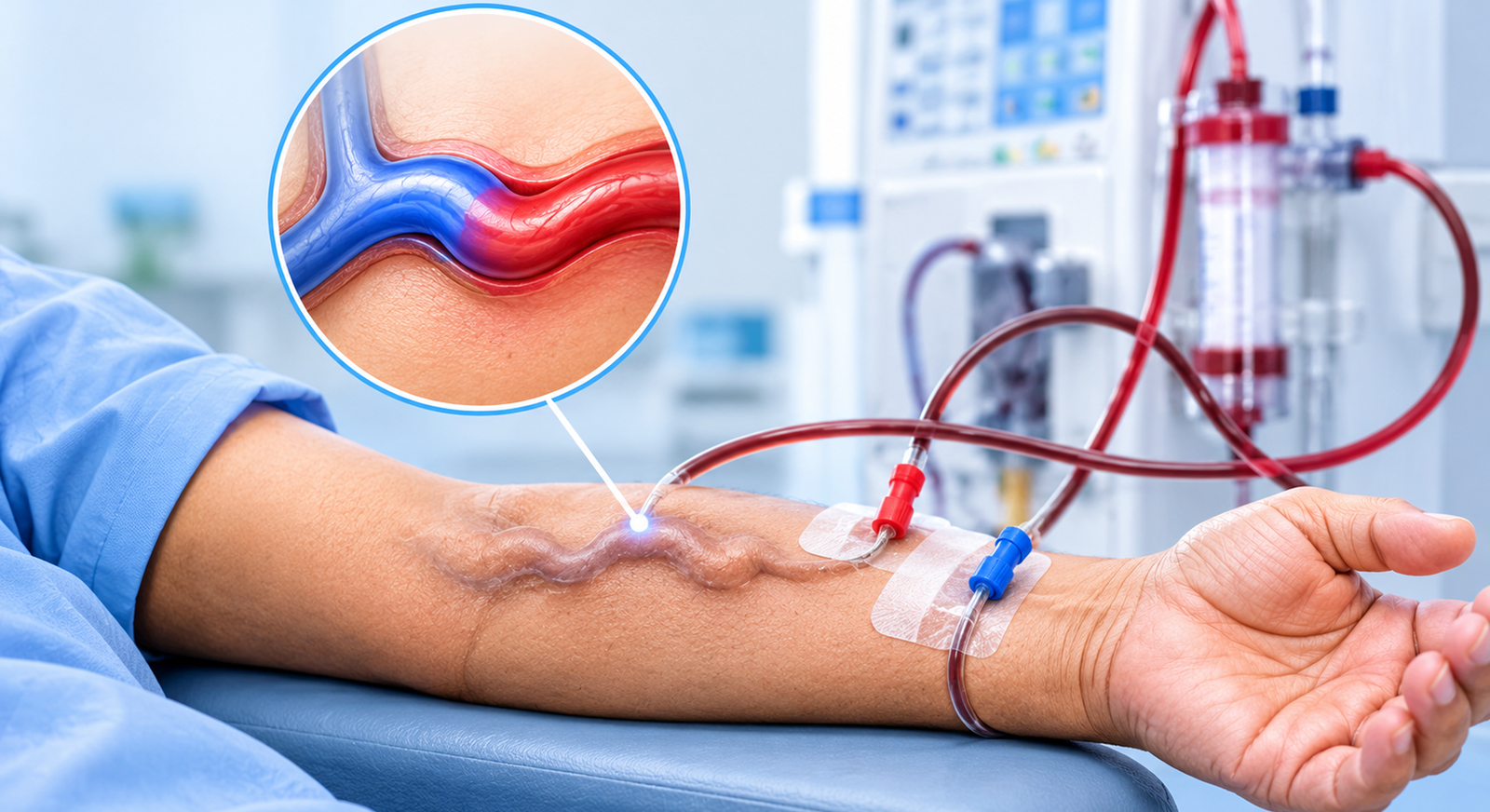
An AV (arteriovenous) fistula is a surgically created connection between an artery and a vein, usually in the forearm or upper arm, that gives patients with kidney failure reliable, long-term access for haemodialysis. Joining the artery to the vein increases blood flow and pressure in the vein, so it grows larger and stronger, a process called “maturation” that usually takes 6 to 12 weeks. Once mature, the fistula allows dialysis needles to be inserted easily and safely. Compared with other options, AV fistulas last longer, have fewer infections and fewer complications, which is why they are considered the best type of dialysis access.
Understanding Dialysis and Why Vascular Access Matters
When the kidneys lose their ability to filter waste, excess fluid and toxins from the blood, a condition known as end-stage kidney disease or kidney failure, dialysis takes over that job. In haemodialysis, blood is drawn from the body, cleaned through a machine (the dialyser), and returned to the body, usually three times a week for about four hours per session.
To do this effectively, the dialysis machine needs a high flow of blood, far more than an ordinary vein in the arm can provide. Normal veins are also too thin and fragile to handle repeated needle insertions. This is why patients need a dedicated vascular access, a strong, durable entry point to the bloodstream. Often called the “lifeline” of a dialysis patient, a well-functioning access directly affects the quality of dialysis and overall health.
What Is an AV Fistula?
An AV fistula is a direct surgical connection between an artery (which carries high-pressure blood from the heart) and a vein (which normally carries low-pressure blood back to the heart). It is usually created in the non-dominant arm, so your main working hand stays free.
Once the connection is made, high-pressure arterial blood flows directly into the vein. Over the following weeks, the vein responds by:
- Becoming larger in diameter
- Developing thicker, stronger walls
- Carrying a much higher volume of blood
This “matured” vein can then be punctured repeatedly with dialysis needles, providing the high blood flow needed for efficient dialysis.
Types of AV Fistulas
The type of fistula depends on the size and health of your blood vessels.
Radiocephalic Fistula (Wrist Fistula)
Created at the wrist by connecting the radial artery to the cephalic vein. It is usually the first choice because it preserves the veins higher up the arm for future use.
Brachiocephalic Fistula (Elbow Fistula)
Created near the elbow, joining the brachial artery to the cephalic vein. It is used when forearm vessels are too small or weak, and it usually provides strong blood flow.
Brachiobasilic Fistula (Upper Arm Fistula with Transposition)
The basilic vein lies deep in the upper arm, so it is moved closer to the skin surface to make needle access easier. This option is used when other veins are not suitable, and may be done in one or two stages.
AV Fistula vs AV Graft vs Dialysis Catheter
There are three main types of dialysis access. Here’s how they compare:
| Feature | AV Fistula | AV Graft | Central Venous Catheter |
|---|---|---|---|
| What it is | Patient’s own artery joined to vein | Synthetic tube connecting artery and vein | Plastic tube placed in a large neck or chest vein |
| Ready for use | 6 to 12 weeks | 2 to 4 weeks | Immediately |
| Infection risk | Lowest | Moderate | Highest |
| Clotting risk | Low | Higher | Higher |
| Lifespan | Longest, often many years | Shorter | Short-term use |
| Preferred use | Best long-term option | When veins aren’t suitable for a fistula | Emergencies or temporary use |
Because it uses your own blood vessels, the AV fistula is widely regarded as the gold standard for haemodialysis access.
Who Needs an AV Fistula?
An AV fistula is recommended for people who:
- Have chronic kidney disease (CKD) stage 4 or 5 and are expected to need dialysis
- Are currently on dialysis through a catheter and need a permanent access
- Have kidney failure and are not yet candidates for a kidney transplant, or are awaiting one
Ideally, the fistula should be created several months before dialysis begins. This gives it enough time to mature, so that patients can avoid starting dialysis with a temporary catheter, which carries a higher risk of infection.
Before the AV Fistula Surgery: Evaluation and Preparation
Careful planning is key to a successful fistula. Before surgery, your vascular surgeon will:
- Examine your arms to assess the size and health of the arteries and veins
- Perform a Doppler ultrasound (vein mapping) to choose the best vessels
- Review your medical history, including diabetes, heart disease and blood-thinning medicines
- Order blood tests to check kidney function, blood counts and clotting
Protect Your Veins
If you have chronic kidney disease, it’s important to protect the arm planned for the fistula:
- Avoid blood draws, IV lines and blood pressure readings on that arm
- Inform healthcare staff that the arm is reserved for dialysis access
AV Fistula Procedure: Step-by-Step
AV fistula creation is a relatively minor surgery, usually performed as a day-care procedure.
1. Anaesthesia
The procedure is generally done under local anaesthesia or a regional nerve block that numbs the arm. Mild sedation may be given for comfort.
2. Making the Incision
The surgeon makes a small incision, usually a few centimetres long, at the wrist, forearm or elbow, depending on the planned fistula type.
3. Connecting the Artery and Vein
The selected vein is carefully prepared and joined to the nearby artery using very fine stitches. This connection is called an anastomosis.
4. Checking Blood Flow
The surgeon confirms good blood flow through the new connection. A buzzing sensation, called a “thrill,” can often be felt over the fistula right away.
5. Closing the Incision
The incision is closed with stitches and covered with a dressing.
The entire procedure usually takes 1 to 2 hours, and most patients go home the same day.
Recovery After AV Fistula Surgery
Recovery is usually smooth. Here’s what to expect:
- Mild pain, swelling or bruising for a few days, managed with prescribed painkillers
- Elevating the arm on pillows to reduce swelling
- Keeping the dressing clean and dry until your doctor advises otherwise
- Stitch removal usually after 10 to 14 days
Helping Your Fistula Mature
Your doctor may recommend simple hand exercises, such as squeezing a soft ball, to boost blood flow and help the vein grow stronger. Regular follow-up visits and ultrasound checks confirm whether the fistula is maturing properly.
How to Care for Your AV Fistula
A well-cared-for fistula can last for many years. Follow these daily care tips:
- Check the “thrill” every day by feeling the vibration over your fistula
- Keep the arm clean, washing it before every dialysis session
- Don’t wear tight clothing, watches or bangles on the fistula arm
- Don’t sleep on the fistula arm or carry heavy loads with it
- Avoid blood pressure checks, blood draws or injections on that arm
- Rotate needle sites during dialysis, as your dialysis team advises
Possible Complications of an AV Fistula
AV fistula surgery is safe, but like any procedure it carries some risks:
- Failure to mature: the vein may not grow enough for dialysis
- Thrombosis: blood clots that block the fistula
- Stenosis: narrowing of the vein that reduces blood flow
- Infection at the surgical or needle sites
- Aneurysm: bulging of the vein wall over time
- Steal syndrome: reduced blood supply to the hand, causing coldness, pain or numbness
- Bleeding after dialysis sessions
Most of these problems can be treated, often with minimally invasive procedures such as fistuloplasty (balloon angioplasty), especially when they are caught early.
Warning Signs to Report Immediately
Contact your doctor right away if you notice:
- The thrill or buzz has stopped or feels weaker
- Redness, warmth, pus or fever (signs of infection)
- Increasing swelling of the arm
- Your hand feels cold, numb, painful or looks pale
- Bleeding that won’t stop after dialysis
- A rapidly growing bulge over the fistula
Acting quickly, particularly within the first few hours if the fistula stops working, can often save the access.
Why Choose an Experienced Vascular Surgeon for AV Fistula Creation?
The success of an AV fistula depends greatly on the surgeon’s skill, careful vessel selection and precise surgical technique. An experienced Vascular Surgeon in Kondapur can assess your veins thoroughly, choose the best fistula type for your anatomy, reduce complications, and provide ongoing care to keep your access working for years.
Conclusion: Plan Your Dialysis Access with Confidence at Ikigai Hospitals
An AV fistula is more than a surgical procedure. It is a lifeline that makes dialysis safer, more efficient and more comfortable for years to come. Planning early, choosing the right surgical team and caring for your fistula properly can greatly improve your dialysis experience and your quality of life.
At Ikigai Hospitals, we provide complete dialysis access care, from pre-surgical vein mapping and fistula creation to follow-up monitoring and treatment of fistula complications. Our vascular care is led by two experienced Vascular and Endovascular Surgeons, Dr. Viswanath Atreyapurapu and Dr. Surya Kiran Indukuri. Both bring expertise in creating durable, well-functioning AV fistulas and in managing access problems with minimally invasive techniques.
Dr. Surya Kiran has over 12 years of experience and serves as Director of the Peripheral Cathlab. He specialises in endovascular procedures such as angioplasty and stenting, which help treat narrowed or blocked fistulas so dialysis can continue without disruption. Together, our specialists focus on building a reliable access that supports you through every dialysis session.
If you or a loved one has been advised to start dialysis, or you are looking for expert AV Fistula Surgery in Hyderabad, don’t wait until the last minute.
Book your consultation with Dr. Viswanath Atreyapurapu or Dr. Surya Kiran Indukuri at Ikigai Hospitals today, and give your kidneys’ lifeline the expert care it deserves.
Medical Disclaimer
The information in this article is for general educational purposes only and is not a substitute for professional medical advice, diagnosis or treatment. The choice of dialysis access, fistula type and timing of surgery depends on each patient’s individual health condition and must be decided by a qualified nephrologist and vascular surgeon. If you have kidney disease or an existing fistula and notice any concerning symptoms, contact your healthcare provider promptly. Do not ignore professional medical advice or delay seeking it because of something you have read online.